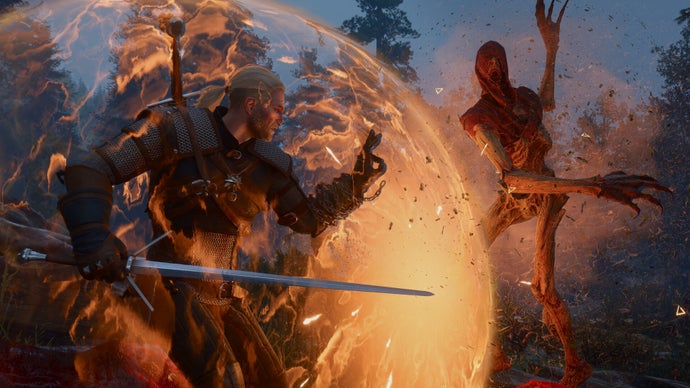
CD Projekt Red's upcoming Witcher 3 expansion, Songs of the Past, showcased new content at Gamescom, but the real draw for players appears to lie elsewhere. A journalist who attended the behind-closed-doors preview found the expansion's narrative and environments competent, yet unremarkable. The footage displayed familiar Witcher 3 design patterns without breaking new ground visually or mechanically within the DLC itself.
However, the expansion arrives alongside a substantial remaster of the entire base game, and that's where the genuine excitement emerges. The combat upgrades integrated into the remaster represent the headline feature capturing player attention. CD Projekt Red has overhauled Geralt's fighting mechanics, refining responsiveness, attack patterns, and overall combat flow. These improvements apply retroactively to the full game experience, meaning players revisiting The Witcher 3 on PlayStation 5, Xbox Series X/S, or PC will encounter a mechanically sharper version of one of gaming's most celebrated action RPGs.
The Witcher 3 released in 2015 to massive critical and commercial success, moving over 40 million copies across platforms. Yet the game's combat has aged noticeably compared to modern action titles. The remaster's combat refinements address this weakness directly, making Geralt's combat feel more fluid and responsive than the original's occasionally sluggish inputs. For a game where swordplay dominates countless hours of gameplay, these changes matter substantially.
Songs of the Past itself represents CD Projekt Red's first major expansion since Blood and Wine launched in 2016. The DLC returns players to familiar territories within the game world, with new quests and story beats woven into existing locations. Early impressions suggest the narrative content lands adequately without reinventing the wheel. The expansion doesn't introduce groundbreaking new mechanics or radically expand the world. It functions as what players expect from Witcher 3 DLC: solid storytelling delivered through the established framework.
This dynamic reveals something telling about current player priorities. The remaster's improvements resonate more powerfully than fresh narrative content because they enhance the entire Witcher 3 experience retroactively. A player powering through the base game benefits from combat refinements across 100+ hours of gameplay. Songs of the Past, by contrast, represents maybe 10-20 hours of additional content layered atop what many players have already experienced multiple times since 2015.
CD Projekt Red faces a delicate balancing act. The studio needs Songs of the Past to attract players for dedicated expansion revenue. Simultaneously, the remaster aims to pull returning players back into The Witcher 3's world entirely. The combat upgrades serve both purposes efficiently. They make the base game feel fresher and more modern, creating incentive for replays or continued playthroughs before tackling the expansion.
For PC players running high-end hardware and console players on current-generation systems, the remaster delivers meaningful visual improvements alongside the mechanical enhancements. Ray tracing upgrades and higher resolutions make the game's already impressive world more striking. The combination of visual fidelity and combat responsiveness creates a genuinely renovated experience rather than a simple port.
The Witcher 3 remains relevant nearly a decade after launch, a testament to its world design and narrative structure. With the remaster and Songs of the Past arriving together, CD Projekt Red extends the game's lifespan for another generation of players while giving veterans new reasons to return.