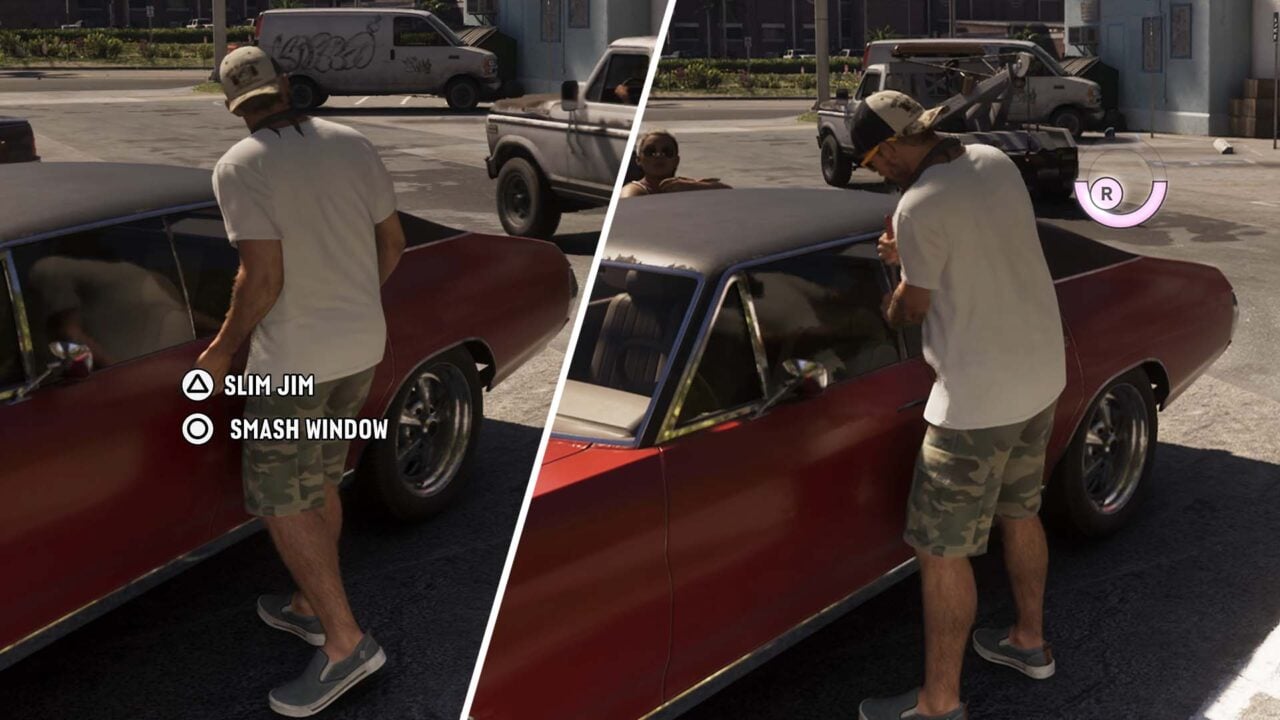
Rockstar Games has fundamentally altered how vehicle theft works in Grand Theft Auto 6, marking the first major overhaul to a core mechanic in over two and a half decades. The studio is making stealing cars genuinely difficult for the first time since the original 1997 GTA launched on PlayStation.
The new system requires players to engage in a minigame when attempting to hotwire vehicles. Success depends on timing and precision, not just walking up to a car and pressing a button. Failing the minigame alerts nearby NPCs and law enforcement, creating real consequences for sloppy theft attempts. This represents a departure from the series' arcade-like approach where carjacking was effortless and consequence-free.
Rockstar designed the change to make vehicle theft feel earned and rewarding. The studio wants players to feel genuine accomplishment when successfully stealing a car, particularly under pressure. Different vehicle types have different difficulty tiers. Luxury cars and police vehicles present harder challenges than standard civilian transportation. High-performance sports cars require more skill than sedans. This tiered approach encourages players to plan their thefts strategically rather than defaulting to the nearest vehicle.
The system also ties into GTA 6's expanded law enforcement mechanics. Police response to failed theft attempts is swift and dynamic. Players can't simply ignore consequences. This creates tension around every carjacking, transforming what was once a mindless action into a deliberate choice with weight. Players must decide whether the target vehicle justifies the risk of getting caught.
This shift reflects broader design philosophy changes at Rockstar. The studio has been moving toward more grounded, simulation-focused systems across GTA 6. Vehicle damage is more realistic. Traffic AI behaves more authentically. Combat feels heavier and more tactical. The car theft revamp fits this pattern of adding depth to mechanics that previous entries treated as throwaway systems.
GTA 5 released in 2013 still featured the original, frictionless theft system. Players could steal any vehicle instantly with zero challenge. That design made thievery feel trivial after the first few hours. By GTA 6's 2025 launch, that approach felt dated to Rockstar's developers.
The change also addresses player engagement. Making theft consistently effortless trained players to ignore vehicles as strategic choices. The minigame system forces active decision-making. Players must engage their attention and skill. This keeps a formerly routine action feeling fresh throughout the 100+ hour campaign.
Rockstar tested various approaches before settling on this minigame-based system. The studio wanted something that felt intuitive but required genuine player skill. The solution needed to work seamlessly across handheld theft sequences and high-speed escapes alike. The final implementation supports both scenarios while maintaining difficulty progression.
GTA 6 launches in Fall 2025 on PlayStation 5 and Xbox Series X/S. The overhaul to vehicle theft will be one of many mechanical refreshes players encounter. This shift signals that Rockstar is committed to evolving long-standing systems rather than preserving them purely for tradition. That approach could reshape player expectations for how future open-world games balance accessibility with challenge.