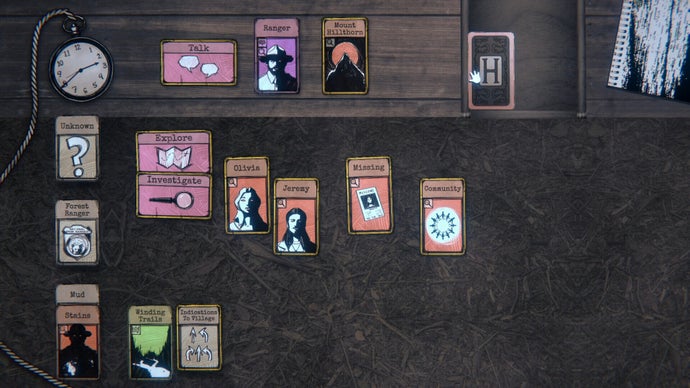
Hillthorn, a new investigative card game from Fool Moon and Finnegan Motors, plants players in the role of a detective tasked with solving a disappearance at an isolated mountain community. The premise immediately signals occult intrigue. Within moments of arrival, the player encounters a forest ranger with questionable hygiene and crosses a line of salt on the trail, a classic supernatural ward that foreshadows the strangeness to come.
Finnegan Motors brings legitimate pedigree to this project. The studio previously developed Inhuman Resources: A Literary Machination, a narrative-driven corporate thriller that demonstrated their ability to blend genre conventions with unconventional storytelling mechanics. Hillthorn applies that sensibility to the detective mystery space, but filters the investigation through card-based gameplay rather than traditional point-and-click adventure design.
The card mechanics appear to serve the mystery itself rather than existing as a separate system bolted onto existing detective fiction tropes. Players interrogate suspects, gather clues, and piece together what happened through card interactions. This approach distinguishes Hillthorn from both standard detective adventure games and straightforward deck-builders. The card system becomes the actual investigative tool, not mere window dressing.
The demo has generated genuine enthusiasm among players who encountered it. Early word centers on effective atmosphere building and a narrative that respects player intelligence. The mountain setting, the occult undercurrents, and the isolated community framework all tap into horror and mystery traditions while maintaining a gaming experience grounded in systematic, rule-based investigation. The salt line detail, seemingly small, communicates volumes about the game's commitment to worldbuilding through environmental storytelling.
What sets Hillthorn apart in a crowded indie narrative space is the integration of card mechanics with mystery solving. Rather than cards serving as combat or resource management tools, they become the vocabulary of investigation itself. This design choice forces meaningful player engagement with the mystery structure rather than allowing passive story consumption. Each card draw or decision creates branches in the investigation.
The spooky card game concept carries commercial appeal beyond niche audiences. Tabletop card culture has exploded in recent years, with games like Inscryption demonstrating that deck-building mechanics can anchor genuinely unsettling narratives. Hillthorn taps into that same market appetite for games that treat cards as more than mechanical systems.
Fool Moon and Finnegan Motors target PC platforms via Steam, where indie narrative games and card-based experiences maintain dedicated audiences. The demo phase indicates a likely Early Access or full launch window within the next several months. The positive reception of the playable build suggests the core loop functions effectively and the mystery unfolds compellingly enough to sustain player interest across multiple playthroughs.
For players fatigued by conventional detective game structures and those seeking atmospheric card experiences beyond standard roguelike frameworks, Hillthorn positions itself as a clear standout. The combination of occult mystery, card-based investigation mechanics, and demonstrated narrative competence from the developers creates a genuine reason to track this title heading toward launch.