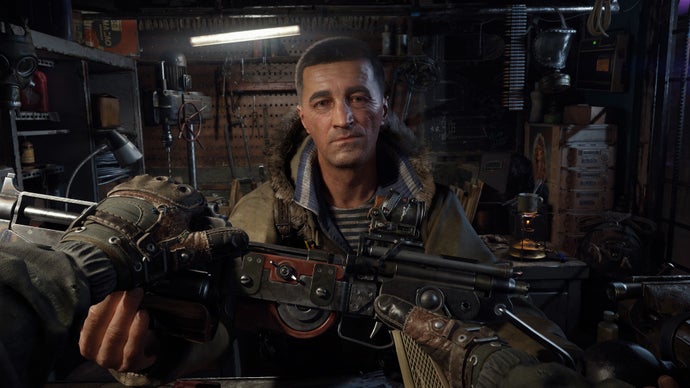
# Metro 2039 Channels Series Roots With Tight Underground FPS Design
Metro 2039 arrives as Ukrainian developer 4A Games' deliberate return to what made the franchise work in the first place. The new entry strips away some of the open-world experimentation that defined Metro Exodus and plants players back in the claustrophobic tunnels beneath Moscow where the series began.
The hands-on time with Metro 2039 confirms the studio's intent. The game leans hard into sneaky first-person shooter mechanics, emphasizing stealth over direct firefights. This represents a philosophical shift. Metro Exodus, released in 2019, pushed the series toward sprawling environments and larger combat arenas. Metro 2039 reverses course. The focus returns to tight corridors, resource scarcity, and tense encounters where avoiding detection beats engaging enemies head-on.
The underground setting proves central to the design philosophy. Players navigate Moscow's subway network, the series' traditional stomping ground. The environment itself becomes a character. Darkness dominates. Tunnels branch into dead ends and chokepoints. Mutated creatures, described as shrimp-like insects, inhabit the sewers alongside human threats. This claustrophobia creates tension that open-world spaces cannot replicate.
4A Games worked extensively with writer Dmitry Glukhovsky on grounding Metro 2039 in the original source material. The Metros 2033 and 2034 novels emphasized survival horror in confined spaces. Metro 2039 appears to honor that literary DNA more directly than its predecessor. The shift suggests developer self-reflection about what resonated with players across multiple games.
The sneaking mechanics reward patience and observation. Players can mark enemies, track movement patterns, and execute quiet takedowns. Ammunition remains scarce, pushing players toward silent elimination rather than spraying bullets. This design echoes the tension-building approach that defined Metro 2033, which arrived in 2010 and established the franchise's reputation for atmospheric first-person action.
However, the preview notes that straying from the established path carries rewards. Exploration finds supplies, lore fragments, and alternate routes through levels. This balances linearity with player agency. The game doesn't punish curiosity. Instead, it incentivizes players to move beyond the obvious progression route. This design philosophy extends beyond combat. Environmental storytelling emerges through careful observation of the underground spaces, collapsed stations, and makeshift settlements that players traverse.
The visual presentation maintains 4A Games' signature aesthetic. Industrial decay, jury-rigged technology, and cramped quarters create an oppressive atmosphere. Lighting plays a crucial role. Flashlights cut through darkness but draw attention. Flares provide temporary illumination at the cost of visibility for the player. These mechanical choices reinforce survival horror tension through gameplay rather than narrative alone.
Metro 2039 launches at a time when the first-person shooter landscape has shifted significantly. Games emphasizing narrative and atmosphere compete against multiplayer-focused titles and live service shooters. 4A Games bet that a return to character-driven, atmospheric single-player FPS gameplay could still find an audience. Early impressions suggest the studio's confidence carries merit.
The game releases on PC, PlayStation 5, and Xbox Series X/S, bringing Metro 2039 to platforms where open-world Exodus found success. Performance and visual fidelity matter for a franchise built on immersion. 4A Games developed Metro 2039 on Unreal Engine, departing from the custom engines used on previous entries. This choice likely affects development speed and cross-platform optimization.
Metro 2039 arrives as a calculated statement. The series' return to underground survival emphasizes that not every sequel requires expansion. Sometimes, returning to foundations and executing them with modern technology and refined mechanics delivers the stronger product.