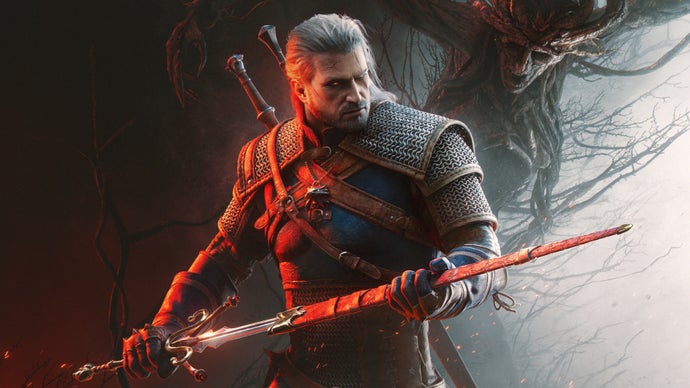
# The Witcher 3's New DLC Struggles to Justify Itself Against Blood and Wine's Legacy
CD Projekt Red announced Songs of the Past, a new expansion for The Witcher 3: Wild Hunt, and the gaming community immediately faced an uncomfortable question: does this DLC need to exist?
Blood and Wine, released in 2016, set an impossibly high bar for narrative-driven expansions. That DLC delivered a 30-hour story arc with its own protagonist, setting, and thematic weight. It wrapped Geralt's journey with emotional resonance and closure that felt earned. The expansion didn't just extend gameplay. It provided genuine closure to a character fans had spent 100 hours developing.
Songs of the Past arrives as The Witcher 3 approaches its eighth anniversary. The game's engine runs on deprecated tech. Most players completed their stories years ago. The expansion comes positioned as a bridge to The Witcher 4, not as a standalone narrative experience comparable to Blood and Wine. That positioning creates immediate friction.
The core problem centers on narrative momentum. Blood and Wine worked because it felt like the next chapter in an ongoing story. Players returned to Geralt with unresolved threads. Toussaint was a fully realized kingdom with political intrigue, monster hunting, and character arcs that mattered. The expansion didn't interrupt the game's narrative flow. It completed it.
Songs of the Past enters a different landscape. Most players consider their Witcher 3 stories finished. They've made peace with their endings. The DLC asks them to return not because the story demands it, but because more content exists. That's a fundamentally weaker proposition than Blood and Wine presented.
Technical concerns compound this issue. The Witcher 3 runs on the RED Engine, which shows its age in 2024. Modern standards for lighting, animation, and environmental detail have shifted dramatically since 2016. Blood and Wine benefited from the midpoint of that engine's lifecycle. Songs of the Past launches near its end. Visual quality matters for immersion, and an eight-year-old engine struggles against current industry benchmarks.
There's also the question of creative fatigue. CD Projekt Red spent years developing The Witcher 4. That project demanded the studio's top creative talent. Songs of the Past appears to have been assembled by remaining staff, possibly using archived assets and existing systems. Nothing wrong with that approach, but it shows in the execution. The expansion doesn't feel like the studio's undivided attention.
The commercial angle reveals another issue. CD Projekt Red needs momentum heading into The Witcher 4. A middling DLC response doesn't generate enthusiasm for the franchise's future. If Songs of the Past feels like filler, players approach The Witcher 4 with lower expectations. If it feels necessary, the studio avoids that trap.
Blood and Wine succeeded because it understood what players wanted: more time with a character they loved, in service of a story worth experiencing. Songs of the Past must prove it offers the same. Early evidence suggests it provides neither. The expansion functions as bonus content, not essential narrative. That distinction matters enormously for a franchise built on storytelling.
CD Projekt Red knows this. The studio built its reputation on narrative depth. That reputation now works against a DLC that can't match its own standards. Songs of the Past doesn't fail because it's objectively bad. It struggles because it arrives in the shadow of one of gaming's best expansions, asking players to revisit a closed story for unclear reasons.
The real test comes when players experience the full expansion. For now, the nagging doubt remains justified.