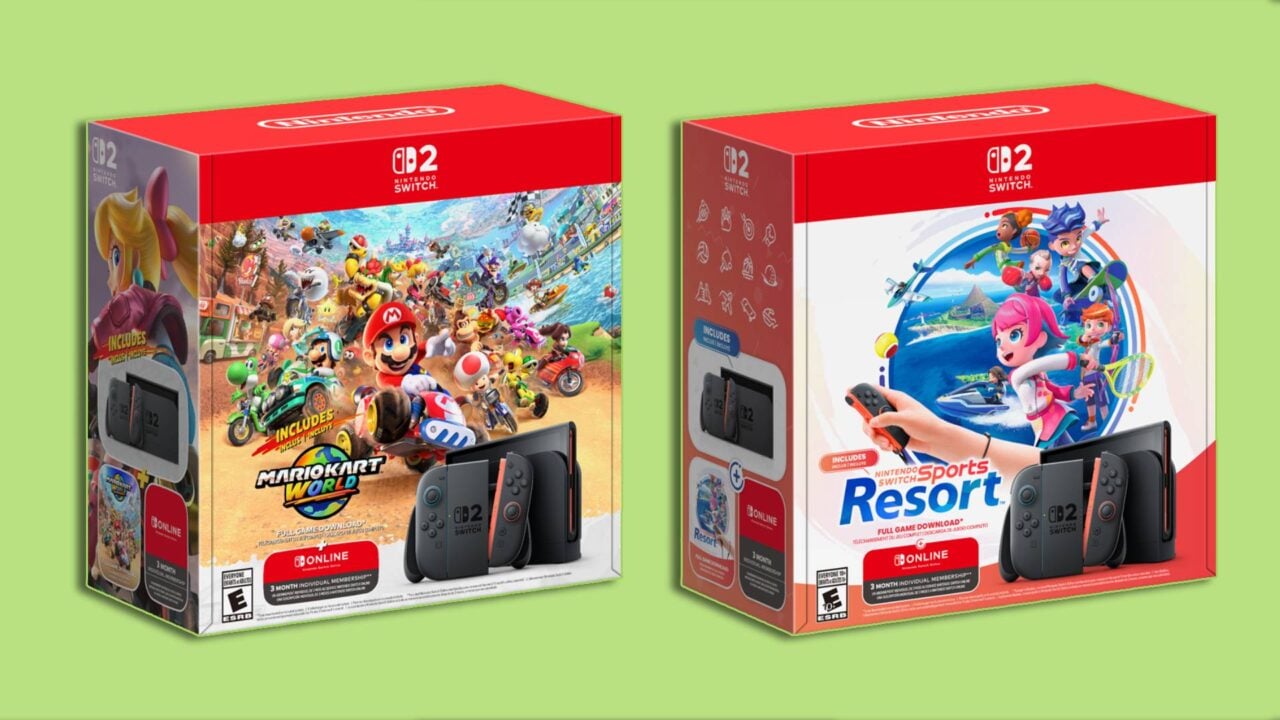
Nintendo's pricing strategy for Switch 2 marks a shift toward premium positioning and bundled value. The company plans to launch the console at a higher base price than the original Switch, then roll out two bundle options later in the year.
The first bundle will package Switch 2 with Mario Kart World, the forthcoming racing title built for the new hardware. This represents continuity with the original Switch's launch strategy, which bundled Mario Kart 8 Deluxe alongside early unit sales. Nintendo leverages its strongest franchise for adoption, knowing that Mario Kart drives hardware sales across demographics and regions.
A second bundle follows later, pairing Switch 2 with Nintendo Switch Sports Resort. This sequel to the 2022 sports compilation expands on motion-controlled gameplay, offering a software anchor for less competitive players or families seeking accessible multiplayer experiences. The staggered rollout extends marketing momentum across multiple quarters rather than frontloading all offerings at launch.
The strategy reflects Nintendo's confidence in Switch 2's demand and its willingness to test price elasticity. Base unit pricing increases signal that Nintendo believes consumers will pay more for upgraded hardware, namely the improved processing power, larger display, and enhanced Joy-Con functionality Switch 2 delivers. This contrasts with the original Switch's aggressive $299 positioning, which prioritized volume.
Bundle pricing typically offers modest discounts versus standalone purchases, so early adopters face a choice. Pay full freight for the base console immediately, or wait for bundle options that bundle software savings with the existing hardware premium. This tiered approach captures both day-one players and patient consumers.
The staggered bundle launch also manages production constraints and supply chain complexity. Bundling requires coordinated manufacturing of consoles, software copies, and packaging. Releasing bundles in waves allows Nintendo to ramp production methodically rather than facing shortages or excess inventory. Given global semiconductor supply challenges of recent years, this measured approach protects margins and ensures stock availability.
Mario Kart World's inclusion signals Nintendo intends a strong racing entry for Switch 2, likely featuring enhanced graphics, expanded track rosters, and online functionality improvements over Mario Kart 8 Deluxe. The game becomes the system-seller launch window title, driving early adoption decisions across core and casual audiences.
Nintendo Switch Sports Resort targets the broader install base months into the console's lifecycle. By the time this bundle launches, early adopters will have worn through launch window software libraries, creating renewed interest in new titles. Resort's family-friendly positioning captures market segments underserved by traditional gaming narratives, maintaining hardware momentum into holiday seasons and beyond.
Geographically, these bundles will likely roll out across North America, Europe, and Japan with coordinated timing, though regional demand variations may shift exact release windows. Japan's strong Nintendo preference may see faster bundle availability, while North America's holiday shopping seasons will inform bundle launch timing.
This bundling strategy demonstrates Nintendo's evolution in hardware marketing. Rather than heavy discounting, the company emphasizes software value and hardware prestige. Consumers pay more upfront but receive curated software experiences designed to maximize engagement. It's a premium positioning move that separates Switch 2 from its budget-conscious predecessor while maintaining the brand's accessibility credentials through varied bundle options.