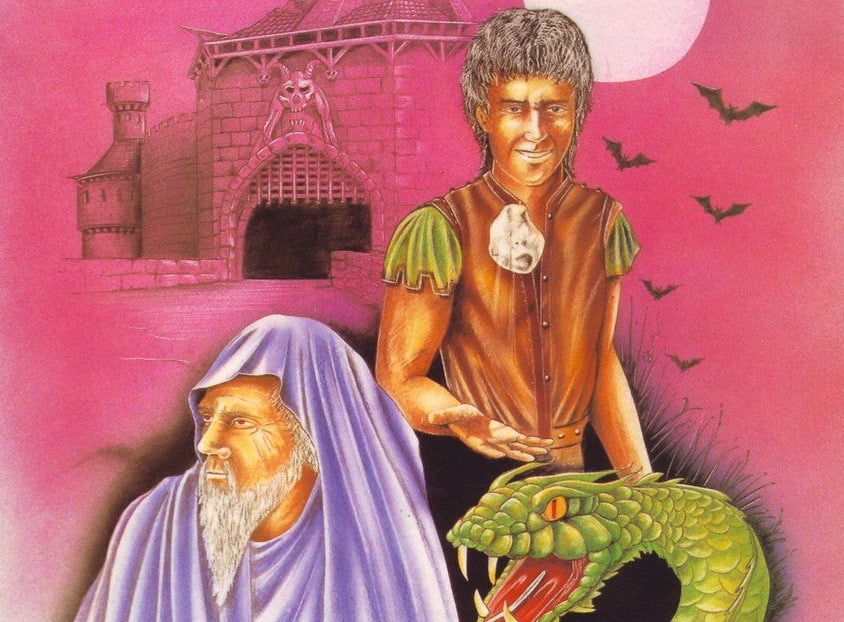
# Dark Castle's 40-Year Legacy Reaches PC, Cementing Its Place in Digital History
Dark Castle arrives on PC this year, marking four decades since the original 1-bit masterpiece debuted on Macintosh in 1986. The news caps a remarkable survival story for one of Apple's most technically ambitious early titles, a game that squeezed jaw-dropping animation and mechanical depth from machines with severe hardware constraints.
The original Dark Castle, developed by Silicon Beach Software, became a defining showcase title for the early Macintosh platform. The game centered on a player character navigating a haunted castle filled with enemies, traps, and puzzles. What set it apart was its animation quality. For a 1-bit black-and-white experience running on a machine with just 512KB of RAM, the sprite work and environmental detail bordered on impossible. The developers hand-crafted hundreds of frames of animation, pushing the Macintosh's display capabilities to their absolute limit.
The game spawned sequels and ports across platforms throughout the late '80s and into the '90s, but the original remains the most iconic entry. Its influence on platformer design and computer animation techniques extended far beyond Mac circles. Game developers studying efficient animation compression techniques still reference Dark Castle today.
The 40th anniversary PC port signals renewed commercial interest in classic Macintosh titles. The Mac gaming library has historically suffered from platform abandonment and technical obsolescence. As original hardware decays and operating systems advance, preservation becomes a practical problem. Emulation and official ports represent the most viable solutions for keeping these games accessible.
This PC release also reflects broader industry trends toward classic game re-releases and preservation efforts. Nintendo, Atari, and other legacy publishers have spent the last decade monetizing their archives. Publishers recognize that nostalgic players and digital archaeologists represent a viable market segment. The success of titles like Pac-Man 99 and recent Game Boy emulation packages demonstrates demand for this content.
Dark Castle's arrival on PC carries particular weight because it represents a Mac-exclusive that defined an era. Unlike Nintendo or Sega properties with broad appeal, Macintosh software largely vanished from public memory after the platform's market share collapsed in the '90s. Many players who grew up on Apple computers never see their childhood games again.
The technical achievement of the original remains relevant. Developers working on performance optimization and low-resolution art styles still study Dark Castle's approach. The game proved that artistic vision and creative engineering could produce compelling experiences within brutal hardware limitations. That lesson applies to mobile gaming, indie development, and experimental design projects today.
The PC version's release date and specific technical details remain unclear from the announcement, but the move signals confidence that contemporary audiences value gaming history. Whether this port sparks broader rediscovery of early Macintosh titles or remains a niche release for enthusiasts will depend heavily on marketing reach and pricing strategy.
Dark Castle endured for four decades through emulation, preserved code, and devoted fans. An official PC port transforms it from historical artifact into playable experience for a new generation. That matters for preservation, for platform diversity in gaming history, and for proving that games built with constraint and craft transcend their original hardware.