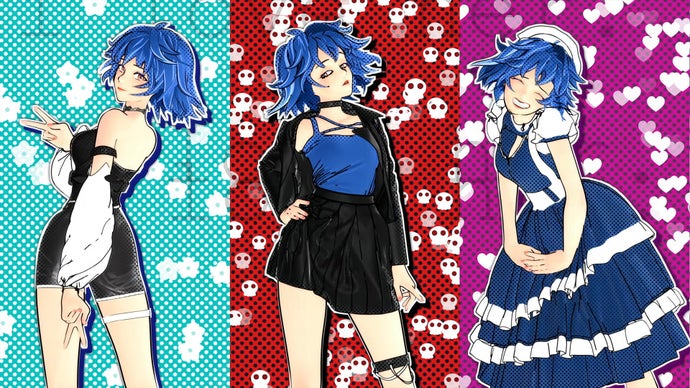
Tulpa the Unseen Lover channels the existential horror of Satoshi Kon's unfinished manga Opus, transplanting that narrative DNA into a psychological visual novel crafted by veterans of the Spider-Verse animation pipeline. The game follows a depressed manga artist whose creative obsession manifests into something tangible and deeply unsettling: a cute yet ominous anime girl born from his own mind.
The setup trades Kon's meta-commentary about creators losing control of their work for something more intimate and disturbing. Rather than a cartoonist literally entering his own creation, the protagonist here experiences the inverse: his creation bleeds into reality as a tulpa, the Tibetan Buddhist concept of a being manifested through concentrated thought. The visual novel format becomes the perfect vehicle for this narrative, as players navigate the protagonist's deteriorating mental state while interacting with an entity that exists in the liminal space between imagination and presence.
What makes this project noteworthy is its creative pedigree. The team behind it includes animators who worked on the Spider-Verse films, the visually innovative superhero features that pushed theatrical animation into new stylistic territory. That background shapes Tulpa's approach. Visual novels typically rely on static character artwork and dialogue trees, but developers with animation experience bring expectations about movement, expression, and visual storytelling that transcend genre conventions. The result promises a psychological experience that leverages both the intimate character focus of visual novels and the dynamic visual language these creators developed in feature animation.
The game taps into growing audience interest in psychological horror presented through unconventional gaming formats. Titles like Doki Doki Literature Club demonstrated that visual novels could subvert their own aesthetic to deliver genuine dread, while games like Hellblade: Senua's Sacrifice showed mainstream willingness to engage with mental illness as core narrative material. Tulpa positions itself at that intersection, using the cute anime girl archetype—a fixture of visual novel fantasy—as the vessel for something psychologically disturbing.
The depression angle adds another layer. Rather than positioning the protagonist as a self-insert fantasy figure, the game anchors him in genuine psychological struggle. The tulpa becomes a manifestation of that depression, perhaps a coping mechanism that transforms into something parasitic or controlling. The game explores what happens when creative escapism stops being therapeutic and becomes pathological, when the imaginary girlfriend trope curdles into something genuinely toxic and frightening.
Spider-Verse animators bringing their skills to visual novels represents a small but interesting crossover. Feature animation studios have increasingly explored gaming, but usually within cinematic action games or licensed properties. Independent teams applying that expertise to niche genres like visual novels suggest broader creative experimentation happening outside mainstream AAA production. These artists get to explore storytelling tools and audience intimacy that feature films can't match.
Tulpa the Unseen Lover arrives in a visual novel landscape where Western audiences have grown more receptive to the format. PC remains the platform, where visual novel fans congregate. The game targets players comfortable with slower-burn psychological narratives and willing to sit with discomfort rather than demand resolution. Its combination of depression, mental manifestation, and genre deconstruction positions it as art-house gaming, accessible but deliberately unsettling.