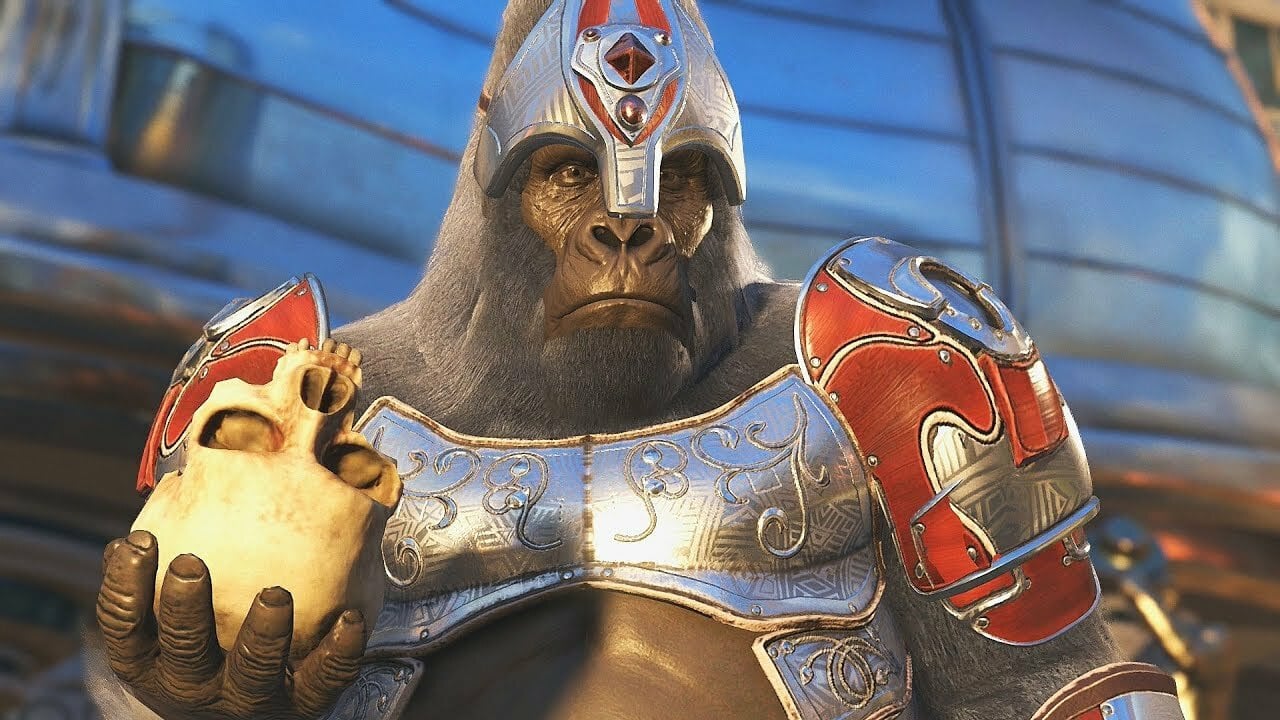
# James Gunn's DCU Finally Gives Comic Book Apes Their Due With Gorilla Grodd Miniseries
James Gunn's DC Universe has green-lit a Gorilla Grodd miniseries for HBO Max, putting the telepathic ape villain front and center in a streaming project helmed by the American Vandal creative team. The move marks the first time DC has given serious development weight to one of comics' most absurd yet enduring antagonists, with the series also featuring Jimmy Olsen in a supporting role.
Gorilla Grodd ranks among DC's oldest villains, debuting in 1959 as the psychic tyrant of Gorilla City. He's appeared across TV, film, and animation for decades, but usually as a secondary threat or punchline. The CW's Flash TV series featured him multiple times, but audiences never saw a proper deep dive into the character's mythology. This miniseries changes that calculus entirely.
The American Vandal creators bring indie credibility to a property that could easily become camp fodder in less capable hands. American Vandal established those filmmakers as satirists with bite, capable of deconstructing genre and narrative convention. Pairing that sensibility with a hyper-intelligent gorilla who commands armies suggests Gunn's DCU intends to play Grodd straight rather than winking at the audience about the concept's inherent strangeness.
Jimmy Olsen's inclusion matters here. The Daily Planet photographer has evolved from supporting player to something closer to co-protagonist in recent DC adaptations. Pairing him with Grodd creates narrative tension between a grounded human character and Gorilla City's absurdist worldbuilding. It's precisely the kind of tonal balancing act that separates forgettable projects from memorable ones.
Gunn's DCU strategy differs fundamentally from the Zack Snyder era. Rather than treating every IP as potential Oscar bait, Gunn embraces genre specificity. Peacemaker worked as a violent comedy. The Suicide Squad committed to irreverent action-horror. A Grodd miniseries that treats telepathic apes with genuine gravity, minus self-aware winking, fits this pattern perfectly.
HBO Max remains the distribution vehicle for most Gunn-era DC streaming content, though that umbrella continues consolidating under Max branding. The platform needs original superhero content to justify subscription costs in a landscape where Marvel dominates streaming. A Grodd miniseries occupies a weird sweet spot: distinctive enough to stand out, weird enough to earn word-of-mouth, anchored to existing DC mythology that requires no expensive rights negotiations.
The miniseries format itself signals restraint. Grodd doesn't anchor a 10-episode prestige drama or a theatrical film. A focused, limited run suggests the creators understand this character works best in concentrated doses. That discipline separates this from the bloated superhero series that dominated streaming five years ago.
Gorilla Grodd has never commanded his own narrative in live-action. Comic book apes have always occupied strange territory between genuine threat and conceptual novelty. Gunn's DCU betting on American Vandal's creators to unlock something deeper in the character suggests confidence in both the property and the creative team. It's the kind of risk-taking that keeps superhero storytelling from calcifying into formula.