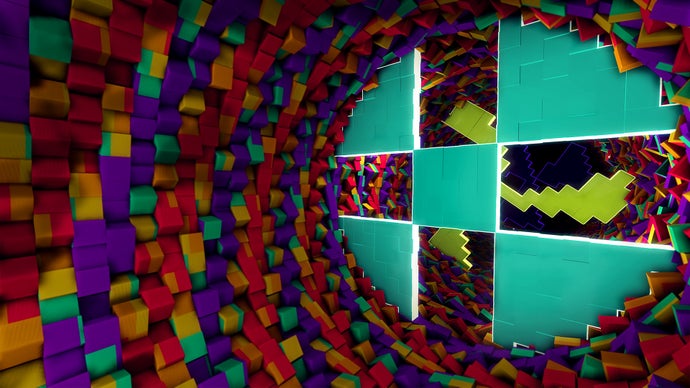
Sensory Overload wears its title like a badge. The indie game strips Minecraft dropper maps down to their core mechanic: endless falling while threading the needle through obstacle patterns. Players drop continuously, dodging walls of varying shapes to accumulate points. That's the whole game. That's also the entire appeal and the source of its chaos.
The trailer opens with a voice asking how much abuse gamers can actually withstand. Sensory Overload answers with visual noise, breakneck pacing, and a difficulty curve that escalates without mercy. The game doesn't ease you in. It throws patterns at you immediately and expects adaptation. This isn't a narrative experience or a puzzle game requiring careful planning. It's pure reflex testing wrapped in a deliberately overwhelming package.
The dropper map comparison matters here. Those Minecraft community creations isolated a specific sensation: the vertigo of falling while maintaining precision. Sensory Overload takes that stripped-down concept and amplifies every element. The geometry shifts. The speed changes. The visual presentation compounds the disorientation.
What makes Sensory Overload notable is its self-awareness about inducing nausea. The game doesn't apologize for making players uncomfortable. It leans into motion sickness territory while simultaneously chasing that rapture moment where everything clicks and you slip through an impossibly tight gap. It wants both effects. It wants you dizzy and elated at once.
This puts Sensory Overload in a specific arcade tradition. Games like Flappy Bird and Getting Over It With Bennett Foddy thrived on simple mechanics paired with brutal execution requirements. Players return to them specifically because they hurt, because failure stings immediately, because success tastes proportionally sweet. Sensory Overload follows that blueprint but turns up the visual intensity another notch.
The game launches on PC, targeting streamers and