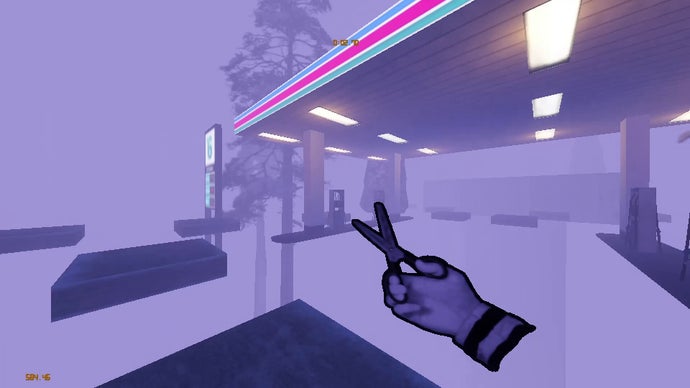
Clipmatrix channels Counter-Strike's movement physics into a momentum-based platformer that elevates bunny hopping from exploit to core mechanic. The indie title, developed as a spiritual successor to Source engine movement exploits, drops players into surreal industrial environments where precise air-strafing and momentum conservation become essential survival tools.
The game takes inspiration from an unintended quirk in Half-Life 2 and Counter-Strike 1.6. Players who mastered bunny hopping in those titles developed a devoted community around movement tech that developers never formally designed. Clipmatrix legitimizes this playstyle by making bunny hopping the primary traversal method, forcing players to chain together strafe jumps, air control inputs, and velocity management across progressively complex obstacle courses.
This approach mirrors how Super Smash Bros. Melee's wavedashing became competitive canon despite being an unintended mechanical byproduct. Clipmatrix takes that philosophy seriously, building platforming puzzles that reward skilled movement execution rather than punishing it as a glitch.
The surreal industrial aesthetic contrasts sharply with the technical precision required. Environments feature twisted metal structures, fragmented geometry, and disorienting architecture that tests both momentum knowledge and spatial awareness. The platforming demands consistent frame-perfect inputs and deep understanding of momentum vectors.
Clipmatrix targets hardcore platformer enthusiasts and Source engine veterans who spent years perfecting movement mechanics in competitive shooters. The title recognizes an underserved audience. Players who consider bunny hopping an art form finally get a game that validates their expertise rather than treating momentum mechanics as unintended quirks.
The indie platformer market remains competitive, but Clipmatrix fills a niche gap. Games like Titanfall 2 and Apex Legends borrowed movement tech from Source shooters, but Clipmatrix goes