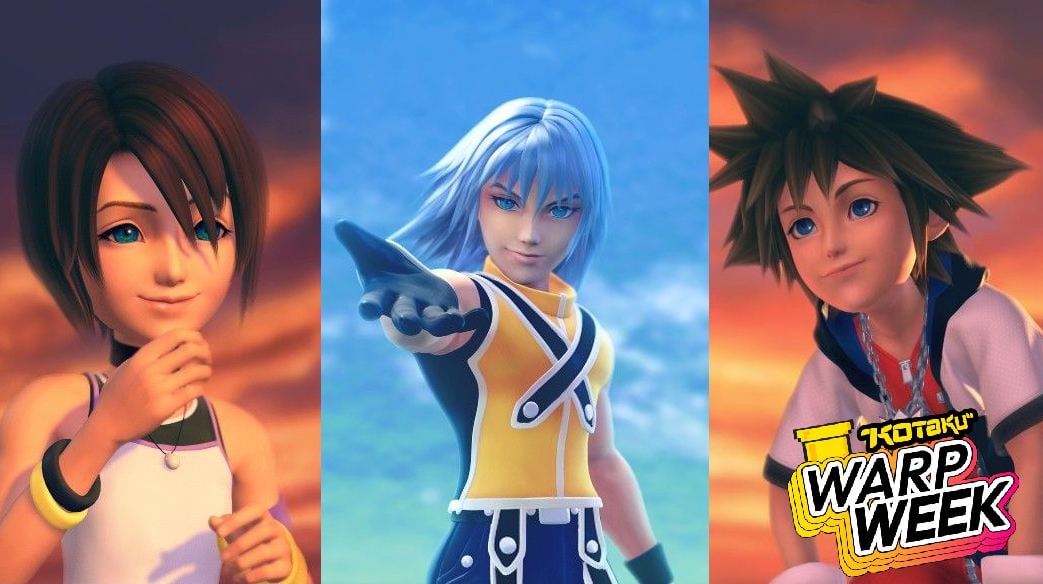
Kingdom Hearts has always operated on an audacious premise. Square Enix's fusion of Final Fantasy mythology with Disney's vast character roster spawned something nobody expected to work, yet the series sold over 33 million copies across its lifetime. The franchise proved that wildly incompatible IP could coexist in compelling ways, and that success raises a fundamental question about how the industry approaches licensing and creative collaboration.
The Kingdom Hearts model didn't just succeed by accident. It worked because both Square Enix and Disney saw value in experimentation. Neither company played it safe. They embraced the weirdness of Sora befriending Mickey Mouse in a world adjacent to Final Fantasy's Midgar. Players responded not despite the strangeness but because of it. The games delivered genuine emotional weight alongside the novelty.
This matters now because the gaming industry remains largely risk-averse. Publishers chase proven formulas. They build sprawling open worlds, live-service ecosystems, and battle pass economies. Creative IP crossovers remain rare, particularly ones where both parties hold equal creative stakes. Kingdom Hearts demonstrated that audiences hunger for unexpected combinations when executed with craft and genuine storytelling ambition.
What comes next could reshape how major publishers think about collaboration. If Kingdom Hearts' formula spreads, we might see fewer siloed franchises and more daring partnerships. Imagine other fantasy universes colliding. Consider what happens when studios stop treating crossovers as marketing gimmicks and start treating them as legitimate narrative opportunities.
The industry hasn't fully learned this lesson yet. Most crossovers feel hollow, existing purely to boost quarterly metrics. Kingdom Hearts avoided that trap by committing to its absurdity. Sora's journey through Disney worlds never felt cynical because the developers believed in the concept completely.
Future success hinges on whether other creators will take similar swings. The technology exists. The audience appetite exists.