CD Projekt Red's quest designer Philipp Weber has revealed the unexpected challenges the studio faced when programming NPCs in The Witcher 3 to behave realistically. The issue centered on getting non-player characters to react appropriately to in-game events, a problem that sounds absurd in hindsight but proved genuinely vexing during development.
Weber explained that for several weeks during development, female NPCs across The Witcher 3 would literally drop their babies whenever certain animations or interactions triggered. The studio had coded characters to respond naturally to player actions and environmental changes, but the system backfired spectacularly when carrying mechanics clashed with other behavioral trees. Women holding infants would suddenly release them as if paralyzed, breaking immersion and creating unintentionally dark comedy moments.
This anecdote highlights a larger truth about modern game design that Weber emphasizes. The bar for NPC authenticity has risen dramatically compared to earlier generations. Developers can no longer ship characters with two lines of dialogue and expect players to suspend disbelief. Contemporary audiences demand consistent, believable behavior. When an NPC clips through a wall or moves in a physically impossible way, clips flood social media within hours. The margin for error has shrunk.
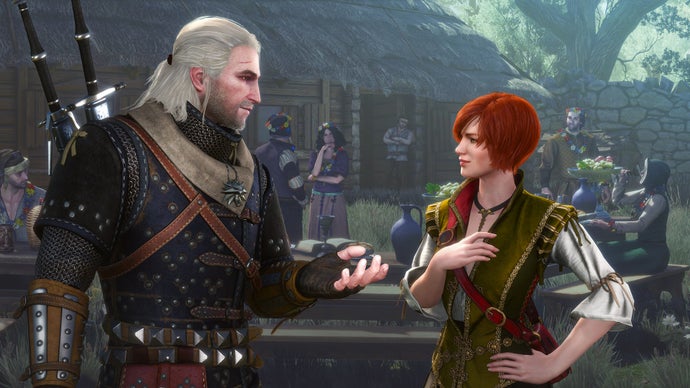
The Witcher 3, released in 2015, pushed boundaries in this space. CD Projekt Red built a massive open world populated with thousands of NPCs, each needing distinct routines, schedules, and reactive dialogue trees. A blacksmith should act like a blacksmith. A tavern keeper should respond differently to Geralt than a noble would. Women holding children should, well, not drop them mid-conversation.
Getting there required meticulous systems design. The studio implemented layered behavior priorities, ensuring that core animations like "hold child" wouldn't get overridden by lower-priority reactions. They had to test edge cases obsessively. What happens when an NPC receives damage while holding a baby? What if multiple animations queue simultaneously? What if the player triggers dialogue while the character is mid-animation?
The bug reveals something developers often work in silence to prevent. Players see the final product and assume flawless execution. They don't see the countless hours spent preventing women from weaponizing infants or ensuring guards actually react when you pickpocket them. Weber's willingness to discuss the "baby-dropping phase" normalizes the iterative chaos behind polished games.
The Witcher 3 ultimately succeeded because CD Projekt Red solved these problems thoroughly. NPCs react contextually to Geralt's presence and actions. A character fleeing combat will panic appropriately. Merchants will haggle. Civilians avoid Geralt if he's covered in blood. These systems feel seamless because developers eliminated the glitches that would shatter that illusion.
This philosophy shaped The Witcher 3's reputation. While some criticized the quest design and narrative choices, few faulted the world's inhabitant behavior. NPCs felt like they lived in the world rather than simply existing in scripted scenes. That perception stemmed directly from solving problems like babies being dropped.
As open worlds grow larger and player expectations escalate, this kind of detailed NPC work becomes table stakes. Baldur's Gate 3 and Dragon's Dogma 2 both pushed NPC reactions further. The question developers now face isn't whether NPCs should react realistically, but how elaborately and thoroughly they can make those reactions feel.