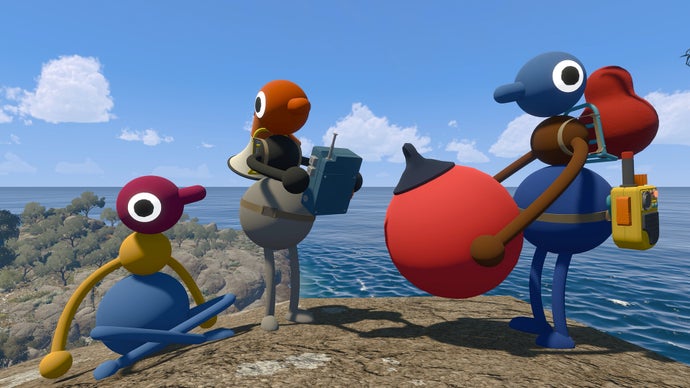
Big Walk, the co-op puzzle adventure from indie developer Creatures of Habit, won't be getting DLC. The studio confirmed this in recent comments, acknowledging uncertainty about the game's long-term direction while essentially ruling out content expansions as part of its future roadmap.
The decision reflects a broader pattern in indie development where smaller teams prioritize a complete, focused experience over ongoing support cycles. Big Walk launched as a self-contained title designed around cooperative puzzling and exploration. The game centers on coordinating with friends through environments that deliberately obscure information and require communication to solve. Players navigate dark spaces, manage limited visibility, and collectively piece together solutions across interconnected puzzle chambers.
The title earned solid reception from critics and players seeking narrative-light, friendship-focused multiplayer experiences. It occupies the same niche as games like A Short Hike and It Takes Two, prioritizing emotional resonance and collaborative problem-solving over combat or progression systems. The seven-hour playtime mentioned by critics suggests a tight, intentional campaign without filler.
Creatures of Habit's candid statement about uncertainty signals they're evaluating what comes next rather than mapping out a content roadmap. This honesty contrasts with many studios that announce games in development before committing to timelines. For Big Walk, the team appears focused on the core experience as delivered, rather than pursuing the live-service model many indie studios attempted during the 2020s.
The absence of DLC plans doesn't indicate failure. Instead, it reflects the game's design philosophy. Co-op puzzlers live or die on their core mechanic and the quality of the base experience. Adding post-launch content risks diluting the carefully calibrated challenge and pacing. Games like Portal 2 succeeded partially because the campaign felt complete. Tacking chapters onto Big Walk might undermine the emotional arc the developers constructed.
Creatures of Habit faces a realistic market. The indie co-op puzzle space attracts dedicated players willing to drop 10-15 hours on a well-made experience, but the total addressable market remains modest. DLC for niche genres often fails to justify development costs. The studio likely determined that resources spent developing expansions would generate minimal return compared to moving toward their next project.
The statement also hints at creative exhaustion. Creating puzzle content that maintains difficulty curves while introducing fresh mechanics is labor-intensive. When a team ships a game that represents their complete vision, forcing additional content can feel artificial. Creatures of Habit appears prioritizing authentic creative work over contractual obligation to shareholders or publishing deals.
The broader lesson applies across indie publishing. Not every successful game needs sequels, DLC, or live support. Some games achieve their purpose as self-contained experiences. Big Walk apparently falls into this category. Players who invested in the game got what the developers intended to deliver. That represents success in an industry increasingly obsessed with recurring revenue and engagement metrics.
Whether Creatures of Habit develops a new IP, revisits this world in a completely different game, or takes a break remains unknown. Their honest uncertainty differs refreshingly from corporate non-answers. For now, Big Walk stands complete. That might frustrate players hungry for more, but it preserves the integrity of what the studio created.