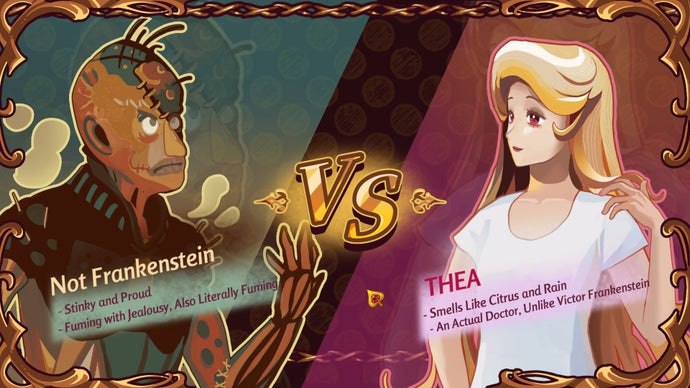
Dance of Theseus arrives as a fresh blend of deck-building strategy and fashion competition, mixing Balatro's roguelike progression mechanics with cosmetic customization and monster transformation. The indie title centers on dressing up creatures for battle, then deploying them in turn-based combat encounters where their outfits directly influence stats and abilities.
The game's core loop borrows Balatro's addictive card synergy system, but swaps poker hands for outfit combinations. Players collect clothing items, accessories, and cosmetic modifiers, then equip monsters to maximize stat bonuses and trigger special effects. Each run scales difficulty, forcing tough choices about which upgrades to pursue and which monsters to invest in. The roguelike structure means failed runs unlock permanent progression, a standard modern indie formula that keeps players grinding toward new unlocks and meta discoveries.
What sets Dance of Theseus apart is its commitment to making monster transformation feel organic rather than grotesque. Despite touching on plastic surgery and body modification, the game maintains a tongue-in-cheek tone throughout. Monsters aren't treated as victims of modification but as willing participants in a fashion competition. The artstyle keeps everything colorful and comedic, avoiding the body-horror potential that could have easily made the premise unpleasant.
The fashion battle system functions as both mechanics and narrative justification. Instead of traditional RPG combat, players navigate stat-based encounters where outfit combinations determine victory conditions. A monster wearing a tuxedo and top hat might gain charisma bonuses, while leather jackets unlock aggression multipliers. This creates meaningful deckbuilding depth where players must balance aesthetics with mechanical optimization, a tension Balatro pioneered but rarely appears in competing titles.
Balatro's influence runs deep here, but Dance of Theseus differentiates itself through thematic cohesion. Balatro stripped poker to its mechanical bones and rebuilt upward. Dance of Theseus starts with fashion and cosmetics, then builds combat systems that feel narratively justified rather than arbitrary. The game respects its premise enough to make the mechanics reinforce the theme.
The indie deck-building space has exploded since Balatro's early access success. Titles like Inscryption, Slay the Spire, and Monster Train dominate discussions, but most focus on cards or creatures in isolation. Dance of Theseus recognizes that cosmetics and character building represent untapped design space. Players want to customize their units, watch them grow, and feel attached to progression beyond raw power increases. Fashion systems in live-service games prove cosmetics drive engagement. Dance of Theseus merges that insight with roguelike fundamentals.
The game targets PC via Steam, positioning itself against a crowded indie market where Balatro comparisons arrive automatically. Success depends on whether the fashion angle resonates beyond novelty. If players invest in monster customization and treat outfit synergies with the same obsessive optimization as Balatro's chip stacking, Dance of Theseus establishes itself as more than a gimmick. If cosmetics feel purely surface-level, mechanical depth alone may not sustain long-term interest.
Dance of Theseus launches with solid design fundamentals, thematic consistency, and a refreshing angle on tired roguelike formulas. The fashion-forward approach to deck-building offers genuine mechanical depth rather than aesthetic window dressing, giving players reason to care about both fashion choices and combat outcomes.