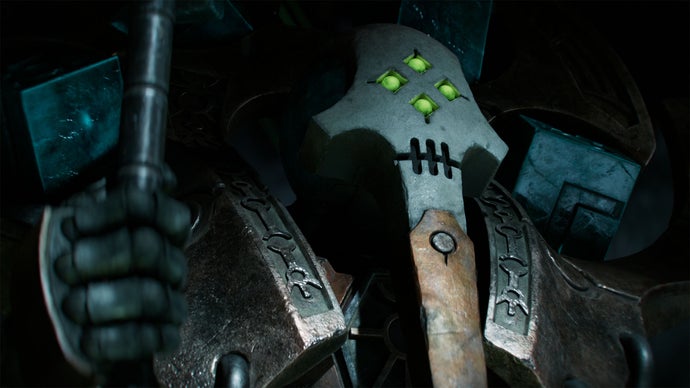
Dawn of War 4 tackles one of Warhammer 40,000's most resilient factions by leaning into their defining weakness. Relic Entertainment's upcoming real-time strategy game positions Necrons as the arrogant, near-unkillable force players expect from the tabletop setting. Yet their overconfidence creates an exploitable flaw: greed.
Necrons in Dawn of War 4 embody their lore perfectly. Every soldier operates as a soul trapped inside living metal, powered by reanimation protocols that let them rise again after defeat. This makes them the ultimate attrition faction. Players directing Necron forces expect constant reinforcement, endless expansion, and the ability to absorb punishment that would obliterate lesser armies. They're designed to be relentless.
Senior game designer Elliott Verbiest confirmed this playstyle resonates with the playerbase. "Players love this type of playstyle," Verbiest stated, acknowledging that the faction's attrition-based mechanics create a distinct strategic identity within the game. The appeal lies in playing an enemy that simply refuses to stay dead. You fortify positions, slowly expand territory, and methodically wear down opposition through sheer numerical superiority and regenerative capability.
But Relic balanced this power fantasy with a tactical vulnerability rooted in Necron culture itself. Their defining character trait, extreme arrogance, translates into mechanical weakness. The Necrons' belief in their own invincibility creates an opening for skilled opponents. Greed becomes their downfall. This approach aligns with how tabletop Warhammer 40K portrays Necrons. They're ancient, powerful, and convinced of their supremacy. That hubris has historically led to their strategic missteps across the IP's narrative canon.
Implementing faction weaknesses through personality rather than pure mechanical deficiency shows thoughtful design. It rewards players who understand Necron psychology. A commander facing Necron forces learns to exploit their hunger for resources and territory. Instead of trying to outmuscle an immortal horde, players can manipulate their greed, forcing bad decisions or over-extension.
This design philosophy extends beyond the Necrons. Each faction in Dawn of War 4 carries thematic strengths and themed vulnerabilities. The Warhammer 40K universe provides rich material for this approach. The Orks gain power through belief and combat fervor but lack discipline. The Chaos factions pursue dark power at the cost of stability. The Space Marines embody rigid doctrine, creating inflexibility. Building weaknesses into faction identity makes each matchup feel narratively coherent rather than mechanically arbitrary.
Relic's decision to anchor Necron weakness in their arrogance suggests the studio understands that the best strategy games marry mechanics with setting. Players fighting Necrons aren't just responding to stat differentials. They're exploiting the psychology of an ancient, proud species convinced of their eternal superiority. That narrative layer makes victories over Necron armies feel earned rather than formulaic.
As Dawn of War 4 heads toward launch, the Necron faction exemplifies how veteran RTS developers approach balance. Creating powerful factions that feel true to their source material while remaining vulnerable to skilled play defines the genre's best entries. Necrons become dangerous not despite their flaws but because players must actively exploit those flaws to survive. That's compelling strategy design.