# Gitaroo Man Delivered Musical Combat Before Guitar Hero Made Rhythm Games Mainstream
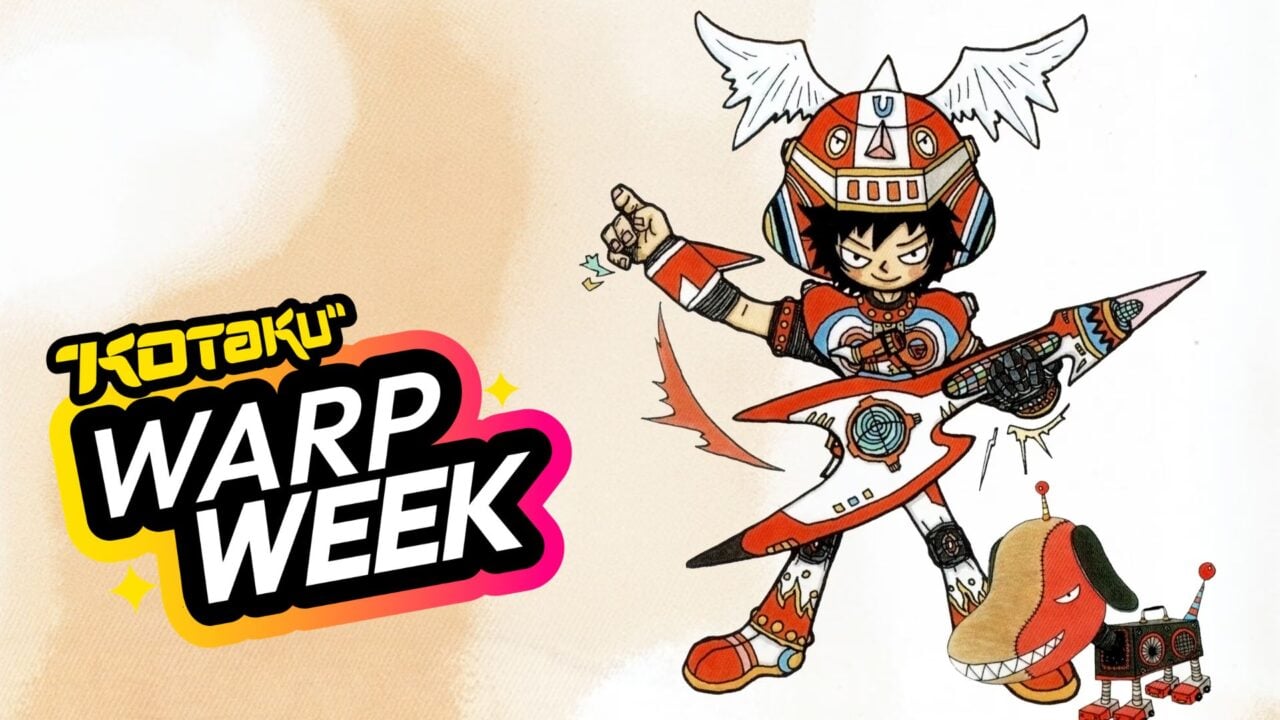
Gitaroo Man arrived on PlayStation 2 in 2001, a full four years before Harmonix and RedOctane launched Guitar Hero and fundamentally changed how the industry approached music gaming. The Konami-published title starred U-1, a teenage guitarist thrust into a surreal narrative where musical duels determine the fate of the world. It was weird, unconventional, and mechanically superior to what would eventually dominate the genre.
The game operated as a rhythm-action fighter. Players didn't just hit notes to the beat. They engaged in turn-based musical battles where U-1 attacked opponents with guitar riffs while defending against incoming attacks from rival musicians. This push-pull dynamic created genuine strategic depth that Guitar Hero's note-matching never attempted. You had to read your opponent's patterns, time your defensive blocks, and unleash combo chains at the right moment to progress through the story.
Gitaroo Man's visual presentation shattered convention. Each battle unfolded across wildly different art styles, from cel-shaded punk rock showdowns to psychedelic abstract sequences. The game didn't just let you play music. It made you watch music happen in ways that felt alive and dangerous. Opponents ranged from a drunken rock star to a military general whose musical attacks manifested as literal weaponized sound.
The soundtrack reflected this avant-garde sensibility. Composer Kei Haneoka created pieces that blended rock, electronic, ska, Latin, and classical elements. Tracks like "Born to Be Bone" and "Fuego" delivered genuine musicality alongside gameplay challenge. This wasn't background music. These were compositions designed to be experienced through interaction.
Guitar Hero launched with a plastic guitar peripheral that immediately captured mainstream attention. The controller's tactile feedback and the familiar song catalog democratized music gaming. Casual players who'd never touched an instrument suddenly felt like rock stars. The franchise exploded. Activision published eight mainline titles and numerous spin-offs. By 2010, the rhythm genre had saturated retail shelves with competing plastic instrument games.
But Gitaroo Man never got a real sequel. The game remained a PlayStation 2 exclusive that most Western players never experienced. A spiritual successor, Gitaroo Man Lives, reached the PSP in 2005 but came too late to challenge Guitar Hero's dominance. The franchise faded into obscurity while Guitar Hero became a household name that eventually collapsed under its own franchise fatigue.
The irony cuts deep. Gitaroo Man possessed more original design, stronger narrative integration, and deeper mechanical complexity. It treated rhythm gaming as a standalone genre with real potential for storytelling and combat dynamics. Guitar Hero succeeded precisely because it simplified the concept. The plastic guitar removed friction. Licensed tracks felt instantly rewarding. The path forward felt obvious.
Modern rhythm games have never recovered Gitaroo Man's strategic depth. Titles like Hatsune Miku: Project Diva and Taiko no Tatsujin dominate in Japan, but the Western market remains Guitar Hero's ghost. Harmonix's recent Fortnite Festival revival proves the plastic guitar still holds appeal, yet the format remains frozen in 2007 gameplay patterns.
Gitaroo Man deserves recognition as the road not taken in rhythm gaming. It proved that musical games could deliver narrative, strategy, and genuine artistic vision years before the industry settled on simpler formulas. The franchise's obscurity represents a missed opportunity for the entire genre.