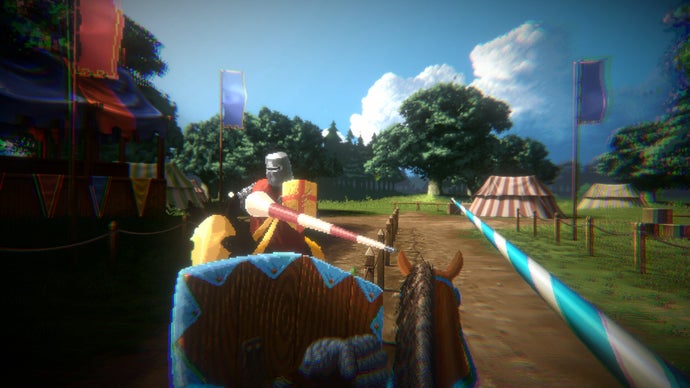
Defender of the Crown, the legendary 1986 Amiga strategy game, returns to PC with Defender of the Crown: The Legend Returns. The new port arrives four decades after the original's debut and bundles three distinct experiences into one package: the classic game untouched, a modernized visual remake, and an entirely new roguelike mode designed for contemporary players.
The original Defender of the Crown defined strategy gaming on the Amiga. Players commanded medieval armies across England during the Norman invasion, balancing military conquest with resource management and political intrigue. The game's blend of turn-based strategy, real-time combat sequences, and hand-drawn artwork set a template that influenced strategy games for years. Its influence extended beyond Amiga circles, earning respect from PC strategy enthusiasts despite platform limitations.
The Legend Returns addresses the fundamental challenge facing classic game preservation. Purists gain access to the original 1986 version exactly as it shipped, preserving historical accuracy for anyone wanting to experience Defender of the Crown as contemporary players knew it. Simultaneously, the visual remake overhauls the art and interface for modern displays and sensibilities, making the core strategy gameplay accessible to players accustomed to current standards without alienating veterans.
The roguelike mode represents the most ambitious addition. Rather than simply repackaging nostalgia, developer Bits Champions injected fresh gameplay into the Defender of the Crown universe. Roguelike structure demands runs through procedurally generated campaigns with permanent death consequences, creating tension absent from the original's persistent world. This mode targets players who enjoy both classic strategy DNA and modern rogue-like loop design, tapping into the genre's explosive popularity driven by games like Hades, Slay the Spire, and FTL.
This approach mirrors how other legacy properties navigate revival. Capcom's Resident Evil 4 remake shipped alongside the original RE4 as a toggle. The Monkey Island franchise leveraged Special Editions for graphical updates while preserving originals. Publishing The Legend Returns offers choice rather than forced modernization, respecting existing fandom while building entry ramps for new audiences unfamiliar with 1986 strategy games.
The strategy genre itself has shifted substantially since 1986. Real-time strategy exploded through the 1990s with Warcraft and StarCraft. Turn-based strategy evolved into complex systems like Total War and Civilization. Indie developers revitalized tactics-focused games through Fire Emblem-style mechanics and tactical RPGs. Defender of the Crown's blend of strategy with action sequences and medieval theme positioning feels both historically important and somewhat dated mechanically.
The roguelike angle demonstrates smart positioning. Roguelikes thrive on replayability and player skill expression, qualities that can refresh aging game design. A roguelike Defender of the Crown strips away some of the original's cruft while preserving strategic decision-making. Whether this lands depends on execution: does roguelike structure enhance medieval strategy or dilute what made the original work?
PC represents the logical platform. Steam's library now includes hundreds of classic games both through preservation efforts and new ports. Modern PCs handle 1986 graphics trivially, making universal backward compatibility impossible to market. Adding new content and visual polish justifies new releases while honoring originals.
Defender of the Crown: The Legend Returns launches into a market primed for legacy game celebration. Nintendo, Sega, and PlayStation all lean into emulation and remastery. PC strategy gaming specifically lacks recent flagship releases, creating room for both historical appreciation and experimental takes on beloved design. This port serves veterans seeking authentic 1986 strategy while recruiting new players through modernized presentation and roguelike novelty.