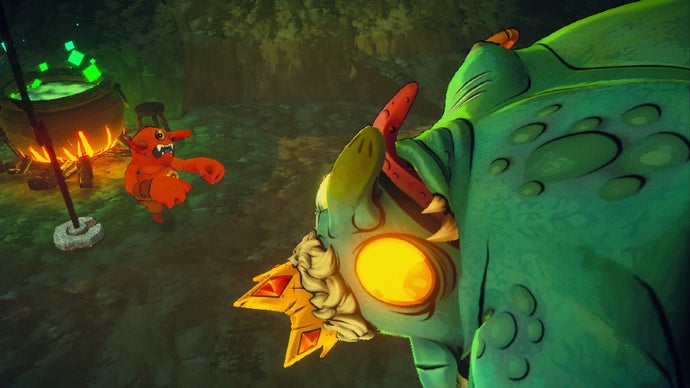
Eclipsium's developers are pivoting from horror to comedy chaos with All Haul The King, a co-op corpse-dragging simulator that trades scares for slapstick. The game tasks players with hauling the massive, elastic corpse of a dead goblin king across expansive maps and onto the Throne of Resurrection, turning corpse management into physics-based comedy gold.
The studio behind Eclipsium, which earned recognition as one of 2025's standout horror titles, now channels that same creative energy toward multiplayer mayhem. All Haul The King embraces asymmetrical cooperative gameplay where coordination breaks down into hilarity. The dead goblin's unwieldy body becomes the central mechanic. Players must choreograph movements, navigate terrain obstacles, and manage the carcass's unpredictable physics as it flops and stretches across the environment.
This shift from horror to comedy reflects a broader trend in indie gaming where developers leverage genre-bending mechanics to stand out. Eclipsium's success positioned the studio with enough momentum and resources to experiment. Rather than chase horror sequels, they're exploring what happens when you apply similar environmental puzzle-solving and physics systems to absurdist humor instead of dread.
All Haul The King targets cooperative multiplayer audiences hungry for games that celebrate failure states and physical comedy. Recent hits like Dave the Diver's minigames and Goat Simulator 3's deliberate absurdity proved that players embrace ridiculous premises when execution nails the tone. The corpse-dragging concept delivers immediate visual comedy. A dead goblin king is inherently silly. That elasticity mechanic introduces unpredictability that generates emergent humor across playthroughs.
The game emphasizes teamwork without requiring precision timing or mechanical skill floors that alienate casual players. Cooperative games thrive when they reward communication and creative problem-solving over twitch reflexes. All Haul The King's core loop of dragging and repositioning appears designed around shared decision-making and collaborative failure. When coordination breaks down, the ensuing chaos likely becomes the entertainment.
PC remains the launch platform, fitting for a title that embraces experimental game design and likely benefits from Steam's indie-friendly audience. Console ports often follow for successful indie co-op titles, but the initial PC release signals confidence in the core community.
The timing positions All Haul The King within a saturated but receptive co-op comedy market. Games like It Takes Two and A Way Out redefined multiplayer storytelling. Stick It To The Man and Human Fall Flat proved physics-based puzzle comedy sustains player engagement across campaigns. All Haul The King enters this space with a specific, memorable hook that separates it from generalist co-op offerings.
Eclipsium's track record matters here. Developers who deliver one successful title earn goodwill and attention for experimental follow-ups. Horror credentials also suggest technical competency with environmental design and world-building that likely translate to creating interesting spaces for corpse-dragging scenarios. Players expect quality production values and level design from established teams, not just novelty concepts.
The goblin corpse itself becomes a character through gameplay interaction. As players drag it across kingdoms toward resurrection, the journey accumulates comedy through accumulated failures, environmental reactions, and the sheer absurdity of the premise. That transformative arc from meaningless dragging to resurrection makes All Haul The King more than a one-joke experience.