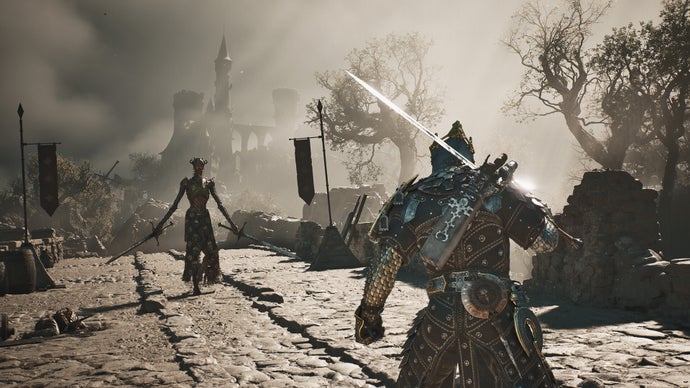
Cold Symmetry's Mortal Shell 2 ditches traditional difficulty modes in favor of modular challenge adjustments. The Soulslike sequel lets players customize their experience through special in-game items that either ease or intensify the action.
On the accessibility side, players can equip items that refill health when executing enemies, making the core combat loop more forgiving. This removes the tension of managing limited healing resources while still demanding precise parries and positioning to land finishing blows. It's a smart middle ground for players who want Soulslike combat without the resource scarcity punishment.
For veterans seeking brutality, Cold Symmetry offers equally creative hardship options. Players can toggle off the sun, eliminating environmental visibility and forcing combat in near-darkness. This transforms familiar arenas into survival tests where spatial awareness becomes as vital as timing. Other modifiers presumably target enemy aggression, player damage output, or healing efficiency.
This modular system reflects a broader industry shift away from binary Easy/Normal/Hard menus. Games like Elden Ring and Hades proved players want granular control over specific mechanics rather than blanket difficulty presets. Cold Symmetry's approach lets someone simultaneously crank up enemy damage while softening execution mechanics, or vice versa. That flexibility matters because players don't fit neatly into difficulty tiers.
The philosophical difference matters too. Traditional modes often feel like developer gatekeeping. Mortal Shell 2's item-based tweaks respect player autonomy. Want to experience the story with minimal resistance? Lower executions' cost. Want an ironman run with pitch-black darkness? Stack those modifiers. The game trusts you to find your sweet spot rather than deciding it for you.
This approach also benefits streaming and content creation. Streamers can adjust challenge live based on audience input or personal preference without restarting. Speedrun