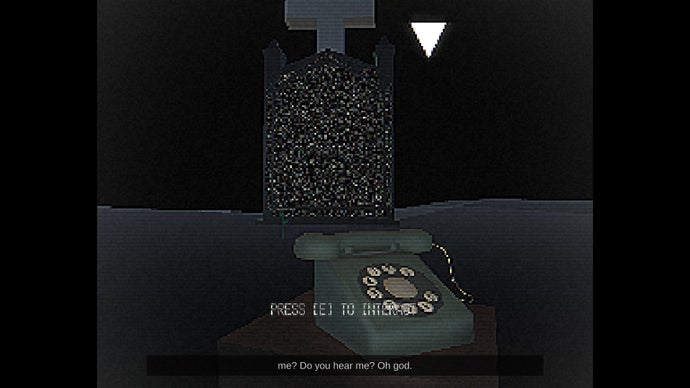
Project Looking Glass places players in an unsettling astral realm where they teleport through a landscape built from personal trauma and memory. The horror game uses the mechanic of leaving your physical body behind as its central conceit, forcing you to navigate a map constructed entirely from your character's worst recollections.
The demo shows a game leaning hard into psychological horror rather than jump scares. Your separation from your body creates constant disorientation. You move through distorted environments that shift between recognizable spaces corrupted by grief and loss. The teleportation system becomes your only tool for traversal, warping you between pockets of memory with no clear path forward.
What makes Project Looking Glass stand out is how it weaponizes introspection. This isn't a haunted house where external threats chase you. Your own mind becomes the maze. The game forces you to confront your character's emotional wounds by literally moving through them. Each teleport jump deposits you deeper into harder truths.
The aesthetic leans into cathode ray tube aesthetics, a retro visual approach that gives the entire experience a dreamlike, degraded quality. Reality feels corrupted. Geometry doesn't quite line up. Colors bleed and distort. This visual language reinforces the horror of losing your moorings, of experiencing the world untethered from your body.
The demo's brevity works in its favor. It establishes the core mechanic and atmosphere without overstaying its welcome, leaving questions about what happens when your character fully confronts their memories. The game understands that psychological horror thrives on what remains unseen and unexplained.
Project Looking Glass taps into a growing interest in introspective horror games that prioritize narrative atmosphere over traditional survival mechanics. It positions itself alongside titles like Spiritfarer or What Remains of Edith Finch, games that treat emotional devastation as the real horror