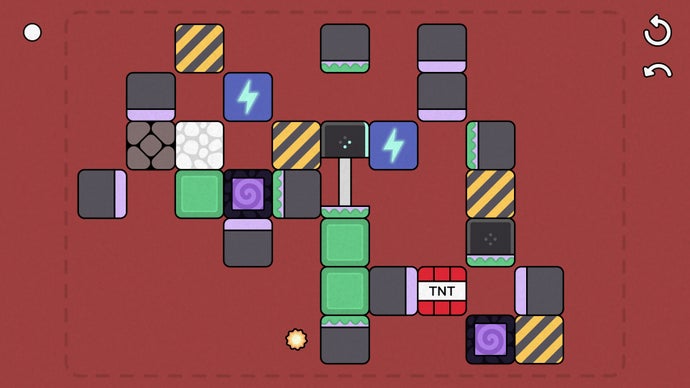
Pight arrives as a stripped-down puzzle game for players exhausted by Minecraft's redstone complexity. Developer Mindlabor created a 2D block-pushing experience centered on moving a lightbulb onto a power source using pistons, dynamite, portals, and electrical blocks inspired by Minecraft's redstone mechanics.
The game targets a specific audience. If you've spent hours constructing hydraulic contraptions or logic gates in Minecraft only to emerge mentally drained, Pight offers a more digestible alternative. It preserves the satisfying logic of redstone puzzles without requiring you to manage sprawling industrial systems or debug elaborate machinery.
Priced affordably, Pight delivers soothing puzzle design on PC. Each level asks you to activate mechanisms and route power efficiently using a limited toolset. The game strips away Minecraft's building freedom and survival mechanics, distilling the experience to pure puzzle solving.
The comparison to redstone is deliberate. Both systems reward experimentation and logical thinking. Both punish mistakes in ways that force you to trace back your steps. The difference is scope. Minecraft redstone thrives on creating monstrous contraptions that border on obsessive. Pight constrains the canvas and limits your options, making each puzzle solvable without requiring an engineering degree.
This positions Pight in a growing market of cozy, accessible puzzle games that appeal to burnout-fatigued gamers. Titles like Into the Breach and A Monster's Expedition already proved players want smart puzzles wrapped in manageable packages. Pight joins them by acknowledging Minecraft's appeal while understanding that not everyone wants to dedicate weeks to perfecting a single redstone circuit.
The game's success depends on execution. Good puzzle design means levels escalate difficulty smoothly, introducing new block types and mechanics at a steady pace. Poor design means