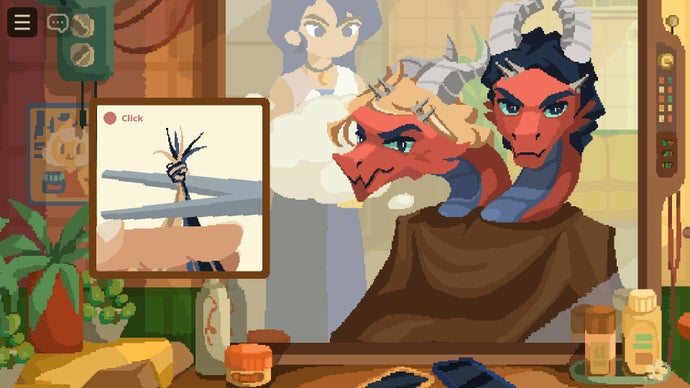
Beastfolk Barber flips the cozy management game formula by grounding its haircut mechanics in genuine worldbuilding stakes. Players run a barbershop staffed with furry clientele while managing a deal struck with a demon, transforming what could be a simple minigame collection into something with narrative teeth.
The game leans into the anxiety of the haircut experience itself. Bad cuts don't just disappoint customers—they carry real social consequences in the game's world. This detail matters. Rather than treating styling as consequence-free busywork, Beastfolk Barber makes each haircut a small story about trust and skill. A sloppy job tanks reputation. A thoughtful cut builds relationships.
What sets this apart from other cozy games is the worldbuilding infrastructure supporting the premise. The demon contract isn't window dressing. The beastfolk aren't just cute NPCs queuing for services. The game constructs a world where these elements interact meaningfully. Customers have histories, preferences, social positions. A wolf's cut carries different weight than a rabbit's. The barbershop becomes a nexus point for that world's social dynamics.
This approach echoes successful indie titles like Unpacking or A Short Hike, which prove that management systems work best when they serve narrative and character rather than exist independently. Beastfolk Barber recognizes that players engage deeper when mechanics reinforce worldbuilding instead of existing alongside it.
The demon contract hook suggests Beastfolk Barber isn't settling for relaxation gameplay. There's implicit tension beneath the cute aesthetic. Players will wonder what that bargain demands, why a barber needed demonic assistance, where this relationship heads. That narrative pull gives the haircut minigame purpose beyond simple repetition.
For a market saturated with cozy games that prioritize vibes over structure, B