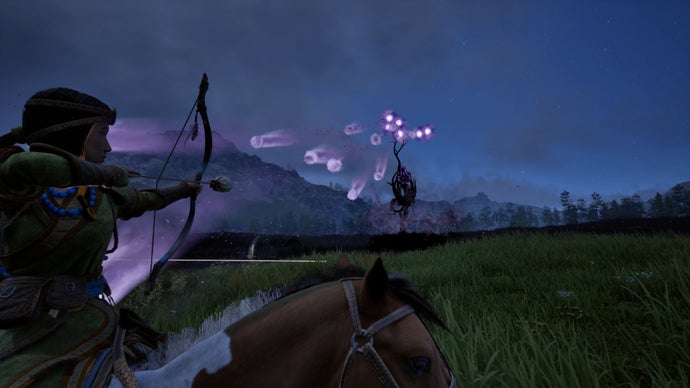
The Legend of Khiimori shifts from serene courier simulator to supernatural survival game with its new Corruption Update. The indie title, built around 13th century Mongolian horse delivery runs across open grasslands, now introduces a plague called "the poison of the earth spirit" that transforms the player's environment into a hostile, infected landscape.
Developer Soulbound Studios pivots the game's core loop. Players still manage courier routes on horseback, but environmental corruption now spreads across terrain, forcing strategic decision-making about which delivery paths remain viable. The supernatural threat adds urgency to what was previously a contemplative, exploration-focused experience.
This update reflects growing player appetite for atmospheric worldbuilding in niche indie titles. The Legend of Khiimori carved out space in a crowded market by emphasizing equine realism and cultural authenticity. Adding the corruption mechanic preserves that identity while injecting narrative stakes and gameplay tension. Death Stranding comparisons circulated during early coverage, though Khiimori leans harder into historical grounding and horse-focused mechanics than Kojima's sci-fi delivery drama.
The tonal shift poses an interesting risk. The game's appeal centered on meditative gameplay and stunning Mongolian vistas. Overlaying supernatural corruption could alienate players seeking that zen experience. Alternatively, it might deepen engagement for those wanting more complexity alongside aesthetic beauty.
Soulbound Studios targets players who embrace slower-paced games with strong environmental storytelling. The Corruption Update tests whether that audience accepts genre blending within their favorite titles. Success here could influence how other narrative-driven indie games introduce stakes without abandoning their foundational identity.
The update lands as indie developers increasingly experiment with tonal experimentation and mechanical evolution. Whether Khiimori's supernatural turn enhances or dilutes its distinctive appeal remains a case study in post-launch