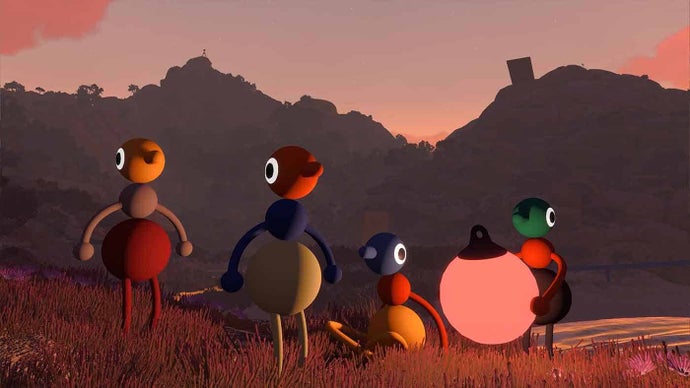
House House's Big Walk masks itself as a laid-back hangout game, but the studio is secretly engineering a 12-player Predator simulator. The open world cooperative adventure from the Untitled Goose Game creators positions itself as a sleepy, post-apocalyptic Center Parcs resort where players solve puzzles and kick rolling lamps around while discussing strategy in voice chat.
The premise sounds cozy. Twelve players roam a shared world, tackle environmental puzzles together, and communicate through voice to coordinate efforts. Standard hangout game fare. Except House House keeps pushing back against this framing. With each update, the studio adjusts voice volume levels, apparently recalibrating audio so players can actually hear each other's callouts without drowning in ambient sound design.
This obsessive tweaking reveals the real game underneath. Big Walk demands constant audio surveillance. Players need perfect hearing to track teammate positioning, puzzle mechanics, and environmental threats. The voice volume fixes aren't accessibility patches. They're calibration for a high-stakes tactical experience masquerading as a relaxing stroll.
The comparison to Predator works because Big Walk inverts the usual multiplayer power dynamic. Twelve players share one perspective rather than competing for dominance. Success requires predatory focus. Hearing becomes your primary weapon. Every voice line carries tactical weight. The "teamwork and talking" tagline becomes sinister when you realize talking is how players hunt together.
House House knows what it built. The studio keeps fixing what breaks communication, refining audio fidelity, and treating voice chat as core infrastructure rather than optional flavor. The post-apocalyptic resort aesthetic and puzzle-solving framework provide cover, but the mechanics underneath demand synchronized hunter behavior.
This explains why House House keeps tinkering rather than launching and moving on. The studio treats Big Walk like a competitive esports title masquerading as a casual