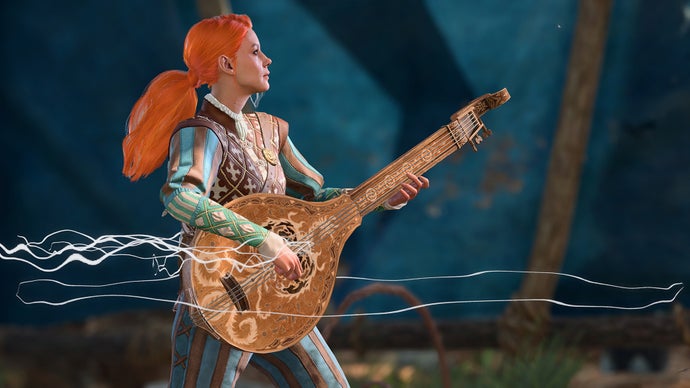
Baldur's Gate 3 players are doing something unusual. Nearly 10,000 Steam users have completed Larian's massive RPG in portrait mode, rotating their screens to play vertically instead of horizontally. That's a deliberate choice made through the game's options menu, and it raises a legitimate question: why would anyone subject themselves to this?
Portrait mode fundamentally changes how Baldur's Gate 3 plays. The game relies on isometric camera angles and sprawling combat encounters across wide battlefields. Squashing that into a vertical frame means constant scrolling, reduced visibility of your party formation, and a cramped view of the tactical landscape. Character models and UI elements become stretched or compressed. It's objectively worse for spatial awareness during D&D-style combat.
The data comes from ProtonDB and SteamHunters tracking, which monitors how players configure their games. The portrait mode phenomenon isn't unique to Baldur's Gate 3, but 10,000 instances is substantial enough to suggest this isn't random error or accidental selection.
Several explanations exist. Some players stream or record content on vertical monitors or phones for mobile-friendly social media clips. Others might use portrait mode as an accessibility option for specific disabilities. A handful could be testing the engine's flexibility or experimenting with unconventional playstyles. Ultrawide monitor owners occasionally rotate their setups. And some players simply enjoy the constraint as a self-imposed difficulty challenge.
What this reveals is that modern game engines support flexible aspect ratios precisely because player needs vary. Larian didn't build portrait mode as a feature, but the option existing means someone will try it. Whether motivated by streaming, accessibility, curiosity, or pure stubbornness, nearly 10,000 Baldur's Gate 3 players found a reason to play one of 2023's most