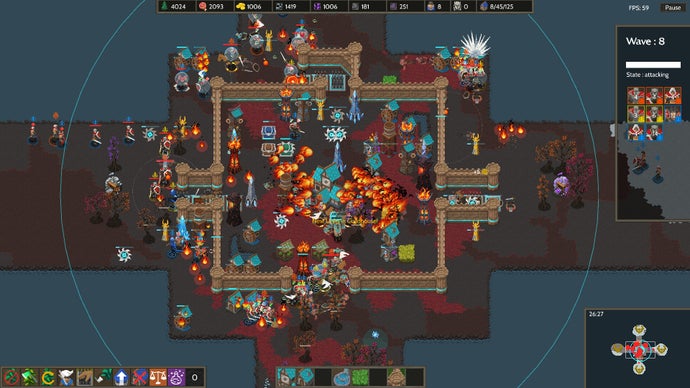
Flow of War strips classic RTS design down to its essentials, creating a game where worker placement and fortress architecture matter more than twitch reflexes. The indie title tasks players with summoning minions from a town hall, then positioning structures like cropfields, forges, and wells to maximize efficiency before enemy waves arrive.
The core loop is elegant. You don't micromanage individual workers or engage in real-time combat. Instead, you conjure units and paint down building templates, watching your laborers autonomously gather resources and construct defenses. The real challenge emerges from spatial planning. Layout your fortress poorly, and your workers waste precious seconds navigating around obstacles. Optimize smartly, and your economy hums before the next assault hits.
This hands-off approach lets Flow of War breathe. The game runs mostly on autopilot once you've positioned your buildings, freeing you to think strategically rather than spam-clicking. Waves of attackers force constant adaptation. You can't simply build the perfect economy once. Each timer reset demands fresh decisions about production priorities and defensive positioning.
The 90s aesthetic reinforces the throwback appeal. Flow of War wears its inspiration openly, channeling Warcraft 2 and Starcraft's structural DNA while trimming away the mechanical bloat that made those games demanding. There's no unit micromanagement, no hotkey memorization, no APM requirements. Just you, your minions, and the satisfaction of watching a well-designed layout churn out resources.
This design appeals to a specific audience. Strategy fans fatigued by the intensity of modern competitive RTS games find Flow of War immediately engaging. The game respects player time and skill without demanding perfection. Newcomers grasp the fundamentals in minutes. Veterans recognize the depth hiding in fortress layout optimization.
Flow of War demonstrates that RTS design remains viable outside esports-