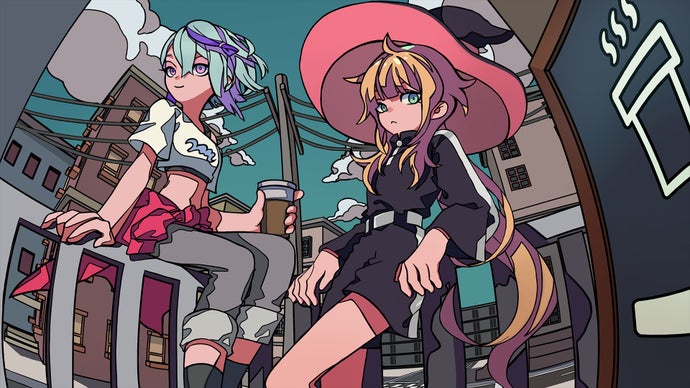
Hips N Noses blends cafe management with roguelike combat in a world gripped by collective insomnia. By day, players run a coffee shop serving customers desperate for memory-restoring brews. By night, they enter dream sequences that play out like Vampire Survivors, fighting through waves of enemies in procedurally generated encounters.
The premise works as both narrative hook and mechanical split. The cafe operates as a hub where players upgrade abilities, unlock new items, and gather resources for nocturnal battles. Everyone in this world suffers from amnesia, making the cafe's coffee more than a beverage—it's a lifeline for sanity and identity recovery. This creates natural progression gates between management phases and combat runs.
The Vampire Survivors comparison anchors expectations. Players face bullet-hell-style dodge-and-destroy mechanics where movement matters more than precision aiming. Roguelike elements ensure no two dream sequences play identically. Weapon variety, enemy patterns, and map layouts shift with each playthrough, forcing adaptation rather than memorization.
The day-night cycle prevents combat fatigue while maintaining engagement. Management sim fatigue is real—pure cafe sims can feel grindy. Hips N Noses solves this by breaking sessions into distinct activities. Morning customers provide income and story beats. Evening preparation sets up inventory. Then the game switches genres entirely for dream battles that test reflexes instead of spreadsheet optimization.
Indie developers continue finding success in hybrid genre spaces. Spiritfarer merged management with narrative adventure. Dinkum mixed business sim with exploration. Hips N Noses follows that template by respecting both halves equally rather than treating one as window dressing.
The world-building premise—universal sleeplessness driving amnesia—justifies both gameplay systems organically. It's not cafe management tacked onto combat. The