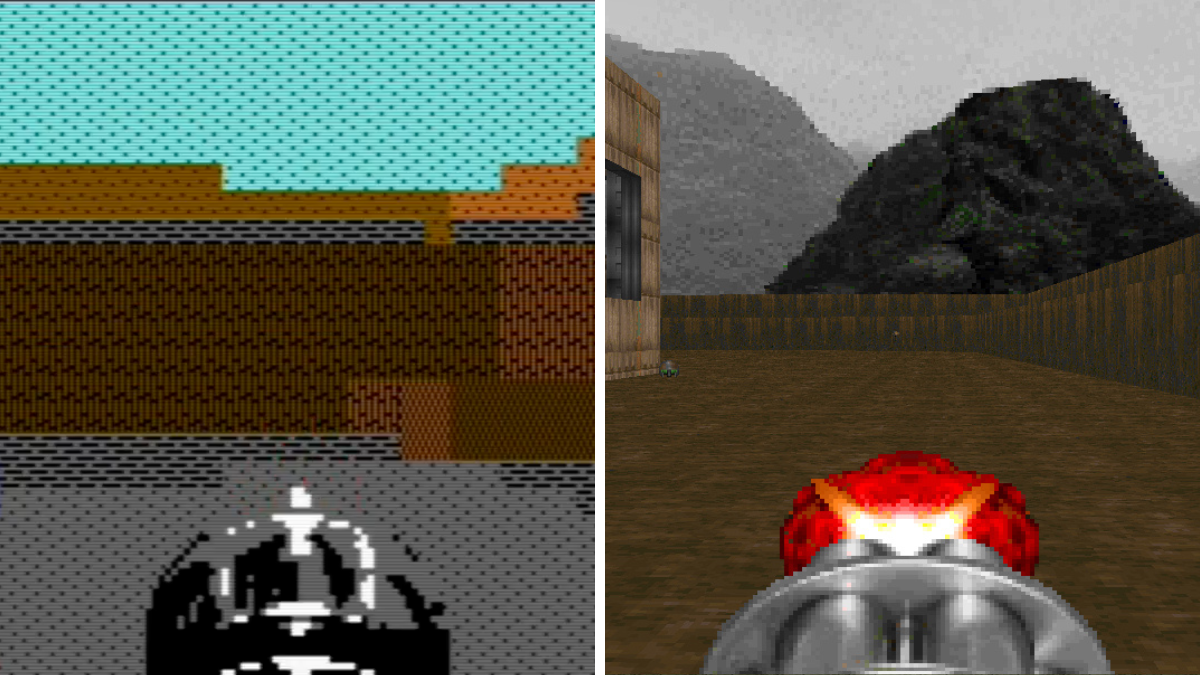
A programmer has successfully ported Doom to the Commodore 64, the legendary 1980s home computer, proving once again that id Software's 1993 shooter runs on virtually anything. The port delivers a functional version of the classic first-person shooter on hardware with just 64KB of RAM and a 1MHz processor.
The Commodore 64 version strips down Doom's visuals significantly compared to even the original DOS release. The display shrinks to a smaller window, textures disappear, and enemies render as flat sprites against minimalist geometry. Frame rates drop considerably, but the core gameplay loop remains intact. Players can move, shoot, and navigate through recognizable level layouts.
This achievement joins a long tradition of Doom appearing on absurd platforms. Over three decades, the shooter has been ported to calculators, smart refrigerators, pregnancy test kits, and countless other devices. Each port celebrates Doom's elegant technical design and becomes a badge of honor for programmers testing the limits of creative engineering.
The Commodore 64 port differs from most novelty builds because it operates within genuine technical constraints rather than arbitrary ones. The C64 shipped in 1982 with specs that would feel impossibly limited today. Getting any version of a complex 3D shooter running on those restrictions demands real optimization skills and deep hardware knowledge. Previous Doom ports to ancient systems often relied on emulation or massive compromise, but functional ports to actual retro hardware remain rare.
The project showcases why Doom endures as a benchmark in gaming culture. Id's efficient codebase and modular design allowed it to scale up to cutting-edge PCs and scale down to machines from generations past. Modern engines struggle with this kind of flexibility. When Doom appears on a Commodore 64 in 2024, it highlights how purposeful architecture beats brute computational force.