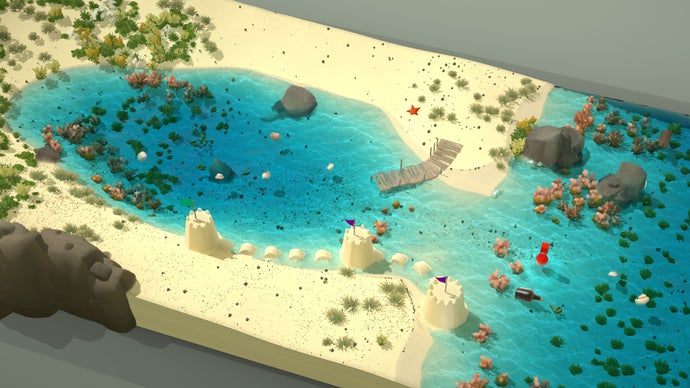
Sandcastle arrives as a physics-based sandbox game that strips away combat, progression, and narrative pressure. Instead, players spend their time constructing sandcastles on inviting beaches using realistic sand physics. The game delivers exactly what its title promises: a relaxing experience centered entirely on creative sand building.
The physics simulation forms the core appeal. Sand behaves authentically as players scoop, pile, and shape it into structures. Gravity and material properties respond logically, creating genuine weight to construction decisions. Unlike most sandbox games that prioritize systems complexity or survival mechanics, Sandcastle commits fully to its singular focus.
This approach fills a specific niche in the market. Cozy, low-stakes games have found substantial audiences through titles like A Short Hike and Spiritfarer. Sandcastle positions itself within this space by eliminating performance pressure entirely. Players build sandcastles at their own pace without timers, resource limits, or failure states. The beach setting reinforces the meditative tone, presenting serene environments rather than hostile ones.
The game targets players seeking respite from competitive gaming and complex systems. Beach vacationers, casual players, and those burned out on traditional progression loops represent its natural audience. The simplicity proves deceptively effective. Most players never experience proper beach environments regularly, making Sandcastle a digital escape that validates its premise.
Publishing decisions will determine reach. Indies with strong aesthetic and clear identity have succeeded on PC through Steam and on consoles through eShop placement. Sandcastle's visual charm and unique premise offer marketing hooks beyond just "sandbox game." Word-of-mouth from cozy game communities could drive organic discovery.
The title demonstrates that games need not offer complex mechanics or high stakes to engage players. Sandcastle proves that focused, well-executed ideas resonate. By committing to a single concept and executing its physics system convincingly, it creates something