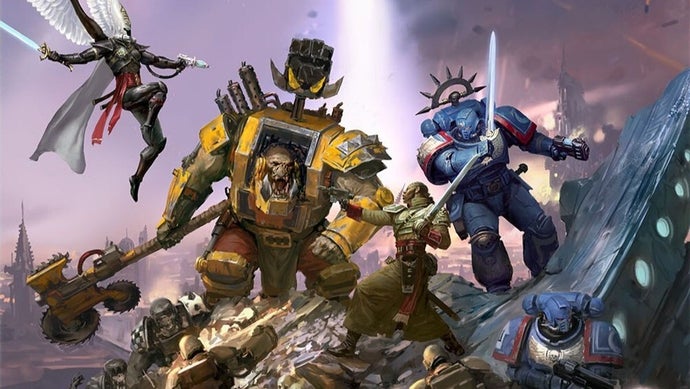
Creative Assembly's Total War: Warhammer 40,000 represents a fundamental shift in how the Total War franchise handles ranged combat. During a recent developer livestream showcasing an Imperium versus Orks battle, the studio revealed mechanics that depart significantly from the series' traditional approach to projectile-based warfare.
The new system emphasizes tactical positioning through sweeping, strafing, and suppression mechanics. These additions introduce complexity layers absent from previous Total War titles. Drop pods and flamers function with entirely new evasion stats, forcing players to reconsider how they deploy ranged units across the battlefield.
This direction reflects Warhammer 40K's tabletop DNA. The grimdark aesthetic and mechanized infantry units demand combat systems that reward precision and squad cohesion over the straightforward line-of-sight calculations that defined earlier entries. Creative Assembly's enthusiasm for these granular details signals confidence that the IP demands these mechanical innovations.
The shift carries implications beyond one game. Total War's ranged combat has remained relatively static across multiple entries, stretching back to the original Warhammer trilogy. Introducing suppression and evasion states transforms how players conceptualize unit engagement. Veterans accustomed to maximizing archer damage output through formation control now face scenarios where positioning affects whether shots land at all.
Warhammer 40K's brutal setting justifies these mechanics narratively. Heavily armored Space Marines and swarm-based Ork boyz require different tactical solutions than historical pike-and-shot formations. The 40K universe's emphasis on armor saves and ranged suppression translates into gameplay systems that mirror tabletop rules.
The success of Total War: Warhammer 40K depends partly on whether these combat overhauls feel fresh rather than overwhelming. Creative Assembly must balance mechanical depth against accessibility for players transitioning from historical Total