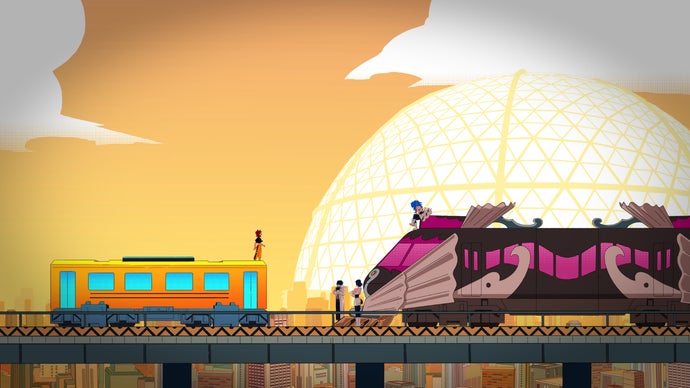
Denshattack's developers embrace countercultural rebellion through an unlikely vehicle: a train-driving game that battles giant mechas. The indie team channels the spirit of skateboarding games and biker gang ethos into their project, rejecting sanitized game design in favor of raw, satirical irreverence.
The game positions itself as a direct response to the commodification of counterculture in modern gaming. While skateboarding titles once carried genuine subversive energy, that spirit has been diluted through corporate marketing and homogenization. Denshattack reclaims that attitude by making players weaponize a locomotive against mechanical titans. It's absurd on purpose. The developers treat the premise not as a gimmick but as a genuine expression of optimism about resistance and unconventional thinking.
This approach reflects broader industry fatigue with sanitized alternatives. Most mainstream games strip away edge and attitude to maximize market appeal. Denshattack actively works against that trend, incorporating biker gang aesthetics and countercultural symbolism as core design philosophy rather than surface decoration. The developers understand that authentic rebellion requires commitment, not just cosmetic choices.
The train-versus-mecha concept serves as metaphor. Industrial, working-class imagery collides with high-tech militarism. Everyday tools become weapons. The underdog wins through creative problem-solving and refusal to play by rules. These themes permeate both the game's mechanics and its visual language.
For players fatigued by corporate-approved "edginess," Denshattack offers something genuinely different. It proves that indie developers can capture counterculture's real essence without irony or pastiche. The developers' explicit goal to "make a better world" through their game signals intent beyond profit. They're building from actual values rather than manufactured brand identity.
Denshattack arrives at a moment when