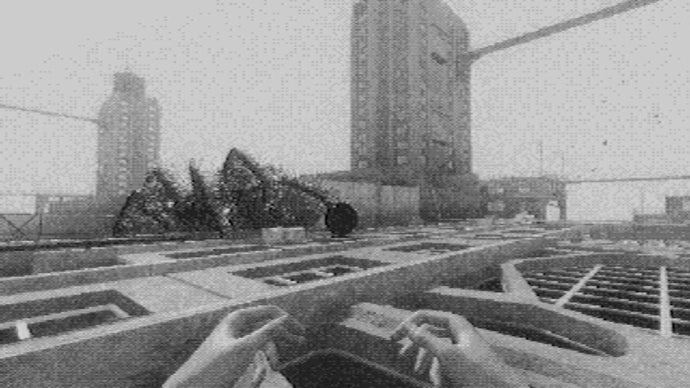
Fallgrade pairs atmospheric exploration with existential dread. The indie title immerses players in a grainy, physics-defying urban environment where environmental storytelling matters more than traditional narrative exposition. The game's most memorable threat is Karl, a massive, fog-shrouded spider that stalks the city's desolate streets.
The spider embodies the game's central tension. Its name, borrowed from the everyday world, supposedly grounds and domesticates what should be terrifying. Yet Karl remains unsettling despite this. The naming convention recalls real-world phenomenon where labeling something theoretically reduces its menace. Here, that principle fails. Karl stays dangerous, unpredictable, and genuinely frightening to encounter.
Fallgrade's world construction emphasizes atmosphere over traditional game mechanics. The grainy visual filter and fog-heavy environments create unease through visual language. The physics-defying city architecture suggests something fundamentally wrong with reality itself. Streets twist in impossible ways. Gravity behaves inconsistently. This environmental wrongness primes players for threats like Karl.
The comparison between Karl and historical arachnid imagery in propaganda adds another layer. The spider evokes Cold War anxieties and anti-Communist rhetoric, yet Fallgrade frames it simply as an obstacle within a broken world. The game refuses easy political readings. Instead, it commits to pure survival horror atmosphere.
What makes Fallgrade noteworthy is its balance between exploration and dread. Players want to uncover the city's mysteries, understand its broken physics, chart its impossible geography. But Karl hunts through the same spaces. The fog that creates mood becomes tactical cover. The grainy visuals that build immersion also limit visibility when the spider approaches.
Indie developers continue proving that atmosphere outpaces budget. Fallgrade demonstrates this clearly. A spider with a human name, lurking in a geometrically incorrect