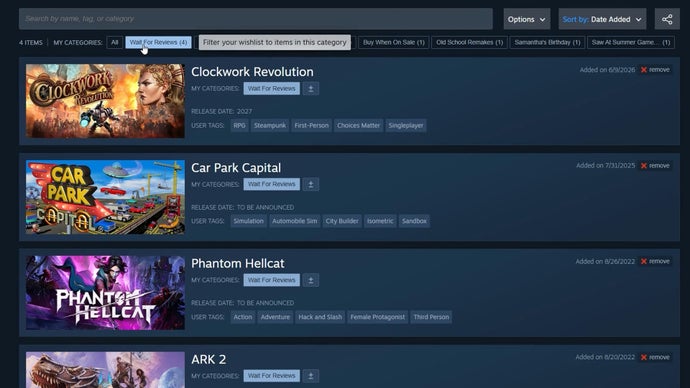
Steam is rolling out wishlist categories, giving players a native way to organize their growing backlogs directly on the platform. The feature arrives as a recognition that many users accumulate hundreds or thousands of wishlisted titles, creating an overwhelming catalog that remains largely unplayed despite good intentions during sales events.
The new category system lets players sort their wishlists by custom tags or predefined filters. Instead of scrolling through an endless single list, users can segment games by genre, priority level, price range, or any other organizational scheme. This addresses a persistent pain point for Steam's audience. Players routinely wishlist games during sales promotions with the genuine belief they'll purchase and play them, only to face analysis paralysis when the moment arrives to actually buy.
The implementation reflects how wishlisting behavior differs from actual purchasing. Many gamers use the feature to bookmark titles for later consideration rather than as a genuine purchasing queue. Custom categories transform the wishlist from a dumping ground into a functional tool. Players can designate a "Next Purchase" section for games they genuinely plan to buy soon, separate indie picks from AAA titles, or mark early access games requiring patience before full release.
Steam's wishlist remains one of the platform's most-used features, driving developer awareness of player interest and influencing discount strategies during seasonal sales. Publishers monitor wishlist numbers as a barometer for launch success. The category update strengthens this ecosystem by making the wishlist feel more actionable rather than purely aspirational.
This change also acknowledges Steam's competitive position against Epic Games Store and Game Pass, both of which emphasize curation and organized libraries. By making wishlist management more intuitive, Valve reduces friction in the discovery-to-purchase journey. Players spend less time hunting for specific titles and more time deciding what to actually buy when sales hit.
The feature rolls out across Steam's platform, affecting millions of users maintaining sprawling