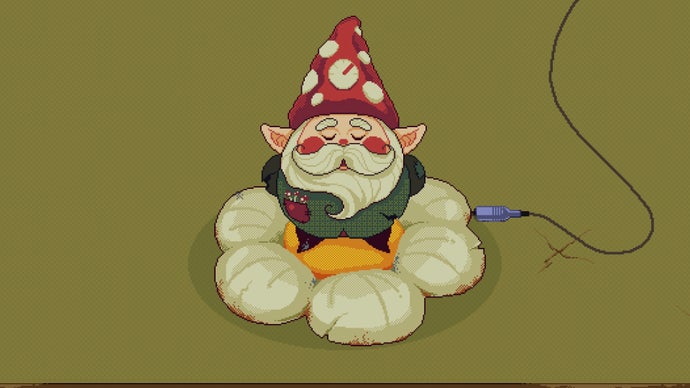
Offbeat, a composer simulation launching in early access today, lets players compose original music using unconventional instruments like cat pianos and singing garden gnomes. The game functions as both a creative sim and functional audio production tool, allowing players to craft everything from jingles to wedding songs.
The premise centers on managing a jobbing composer's career while experimenting with surreal musical arrangements. Players arrange sequences of inputs across fantastical instruments to construct functional compositions. The cat piano and singing gnome serve as viable sound sources for actual music production, even if mastering them requires genuine musical intuition. Attempting to recreate Deep Purple's "Smoke on the Water" riff on a cat piano proves challenging but technically possible for players with sufficient skill.
Offbeat positions itself at the intersection of game and music software. Rather than simplifying music creation into rhythm-game mechanics, it demands real compositional thinking. Players must understand musical structure, timing, and arrangement to produce coherent tracks. The early access launch signals developer confidence in the core loop, though the game remains unfinished.
The timing matters for indie development. Music creation games rarely achieve mainstream success, but niche audiences consistently support tools that blend entertainment with creative functionality. Games like GarageBand on iOS and BandLab proved audiences want accessible music-making. Offbeat targets players seeking something weirder and more game-like than pure production software, but more musically serious than rhythm games.
The singing gnome and cat piano aren't gimmicks without purpose. They define Offbeat's identity in a crowded space. Visual absurdity paired with functional audio tools creates memorable differentiation. Players will screenshot their garden gnome orchestras. Social media amplifies indie games through novelty and shareability. Offbeat's instruments deliver both.
Early access launches carry risk for indie developers, requiring active community engagement and transparency about development roadmap