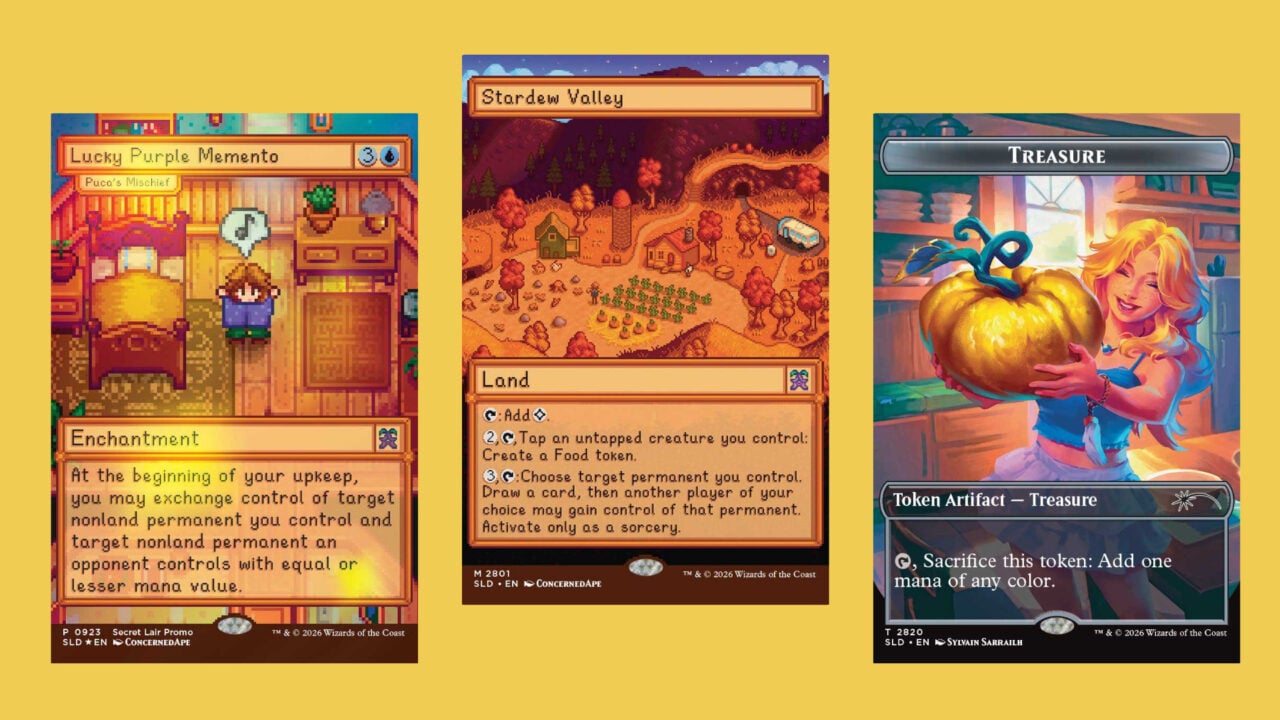
Wizards of the Coast has partnered with Stardew Valley to create a Magic: The Gathering Secret Lair drop inspired by the farming sim. The collaboration marks another expansion of MTG's crossover strategy, which has already included drops based on Dungeons & Dragons, The Lord of the Rings, and numerous other franchises.
Secret Lair drops are limited-edition card releases that typically sell out within hours of launch. These products target collectors and casual players willing to pay premium prices for alternative art and themed packaging. The Stardew Valley set will feature cards redesigned with artwork and aesthetics pulled directly from Eric Barone's indie farming simulator, which has sold over 20 million copies across all platforms since 2016.
Stardew Valley's crossover appeal makes it a natural fit for MTG's expansion beyond traditional fantasy. The game attracts players outside the core gaming audience, including farming simulation enthusiasts and those seeking relaxing gameplay experiences. This demographic overlap with MTG's growing casual player base represents a calculated move by Wizards of the Coast to capture crossover spending.
Secret Lair drops have proven controversial within the MTG community. Players argue these limited releases create artificial scarcity and pressure collectors to purchase immediately or miss out entirely. The model generates significant revenue but alienates some longtime fans who view it as extractive monetization.
Stardew Valley fans unfamiliar with Magic will face a barrier to entry. Understanding card mechanics and deck construction requires knowledge most casual players lack. However, the aesthetic appeal alone drives collector purchases, even among non-players seeking display pieces.
The collaboration confirms Magic's strategy of licensing established IPs to maintain revenue growth. With MTG Arena providing free digital access and Secret Lair drops targeting hardcore collectors, Wizards now operates a dual monetization model that captures both casual and whale spending simultaneously. Expect the