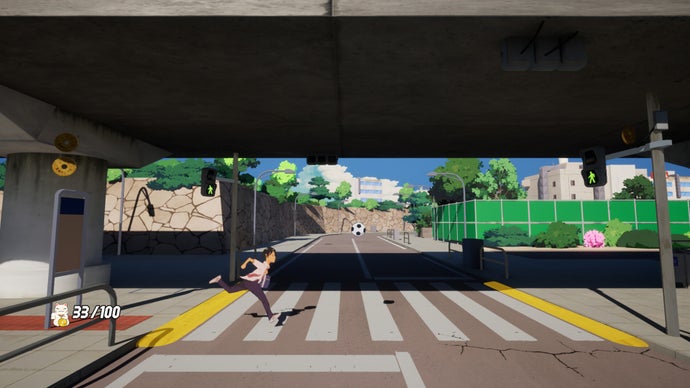
Kick proves that football games don't need to appeal exclusively to sports fans. The platformer hybrid takes soccer mechanics and wraps them in sidescrolling level design, creating an accessible entry point for players who skip traditional sports titles entirely.
The game centers on ball control and momentum rather than simulation depth. Players dribble a football through obstacles, navigate environmental challenges, and solve puzzles using the ball as a core mechanic. This design choice bridges two genres that rarely intersect. Platformer enthusiasts get precision controls and spatial problem-solving. Sports fans get their football fix without tactical menus or squad management systems.
What makes Kick work is its visual presentation. The title features clean pixel art and satisfying animation that makes the ball feel responsive and weighty. Movement feedback matters enormously in platformers, and Kick delivers on that front. Each dribble, touch, and bounce reads clearly on screen.
The timing arrives during a period when indie developers increasingly experiment with genre mashups. Games like Blasphemous combined metroidvanias with gothic horror. Slay the Spire turned deck-building into roguelike combat. Kick follows this trajectory by recognizing that mechanics don't belong to single genres. A ball is just a physics object. How you interact with it determines the experience.
This approach also explains its appeal beyond traditional soccer audiences. Players fatigued by annual FIFA and EA Sports FC iterations see something fresh. The platformer foundation removes pressure to sweat competitive multiplayer or live service content. Kick offers complete, contained experiences level by level.
The game's existence highlights a gap in market perception. Publishers often assume sports games must target sports fans exclusively. Indie developers operating without that assumption experiment more freely. Kick demonstrates that a single mechanic, executed well and placed in unexpected context, resonates with entirely different audiences.
Whether casual players embrace football platformers at scale remains