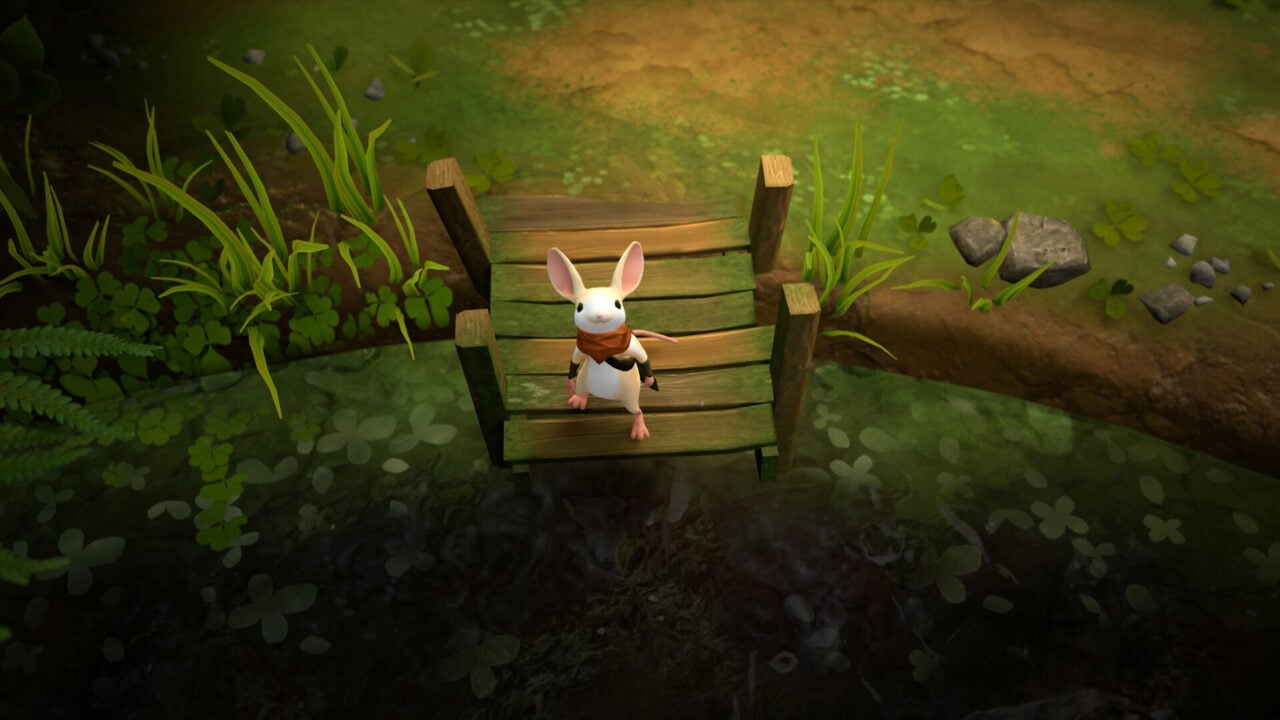
Moss 2, the sequel to Polyarc's beloved VR platformer, arrives on PlayStation 5 and Nintendo Switch this year. The original Moss landed on PSVR back in 2015 and established itself as a standout VR experience, earning critical acclaim for its unique perspective on adventure storytelling. The game let players control a small mouse protagonist while interacting with the environment through direct hand presence, creating an intimate connection between player and character that VR uniquely enabled.
The console ports strip away that core mechanic. On PS5 and Switch, Moss 2 becomes a traditional third-person adventure without the spatial interaction layer. Players no longer reach into the game world to manipulate objects or guide the mouse directly. Instead, they control the camera and character movement through standard inputs. That fundamental shift transforms how the game feels to play and experience.
For those who spent nine years with the original Moss on PSVR, this adaptation represents a substantial loss. VR presence creates emotional resonance that flat screens struggle to replicate. The ability to physically reach toward the mouse, to gesture and interact with puzzle elements, grounded players in the narrative in ways traditional gaming cannot match. Removing that layer removes what made Moss special.
Polyarc faced an inevitable trade-off. Expanding beyond PSVR reaches new players on platforms with significantly larger audiences than the VR install base. PlayStation 5 and Switch collectively dwarf the PSVR player population. From a business perspective, console versions make commercial sense. They democratize access to Moss 2 for players who own traditional hardware.
But the article touches on an uncomfortable truth. Sometimes technological limitations create magic. VR's constraints forced Polyarc to innovate, to find ways to make players feel present in Quill's world. Porting that experience to traditional consoles requires