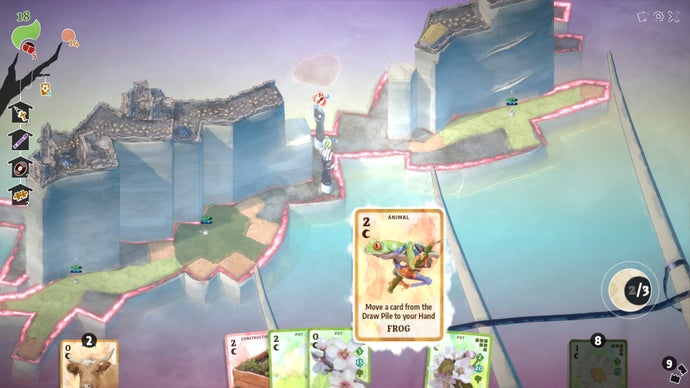
The Solace of Flowers strips the grimness from roguelike deckbuilders. Ceiling Games has created a hybrid that merges the strategic depth of Slay the Spire with the restorative gardening vibes of Terra Nil, resulting in something that feels both tactical and soothing.
The core loop works like this: you play cards to deploy plants and creatures across corrupted grid-based islands. Foxgloves, daffodils, honeybees, and squirrels populate your deck. Your goal reverses the typical dungeon-crawler narrative. Instead of defeating enemies, you're healing corrupted terrain by spreading botanical life. The cards generate organic effects. A duck card discards from your hand. Lion cards actually produce dandelion seeds, a clever bit of poetic naming that lets the game maintain its gentle tone while keeping its whimsy intact.
What makes this work is the framing. Most deckbuilders operate on extraction and destruction. You loot, you build power, you dominate. The Solace of Flowers reorients that reward loop toward restoration. Covering barren land with living things creates the same dopamine hit as watching deck synergies click into place, but the fantasy shifts from conquering to nurturing. The roguelike structure remains. You'll face procedural runs with escalating difficulty. Card synergies matter. Deck composition determines success or failure.
The "eco-dystopian" descriptor signals the stakes. These islands aren't corrupted by accident. The game presents environmental collapse as something you actively reverse through patient, strategic care. It's a radical departure from roguelikes that lean on warfare and personal power accumulation.
This release taps into a broader industry trend. Games like Spiritfarer and A Short Hike proved players hunger for experiences that prioritize contemplation over conquest.