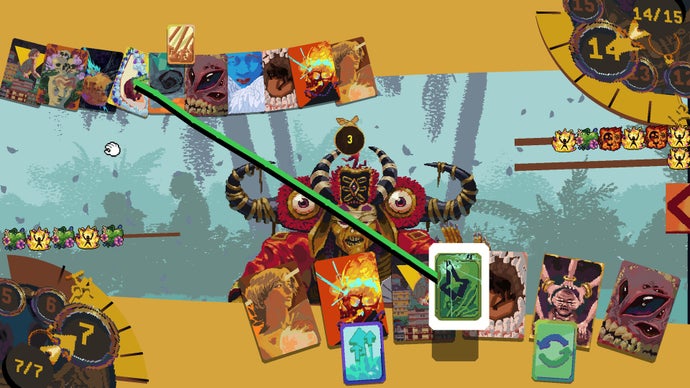
Appa combines narrative depth with reactive card mechanics in a way most digital card games fail to achieve. The upcoming indie title centers on two siblings processing their father's death through surreal, vibrant card battles where every opponent move triggers player reactions.
The game's visual presentation breaks from the sterile aesthetic plaguing the genre. Developer Whitethorn Games crafted a gorgeously illustrated world that matches its emotional weight. Card games typically sacrifice visual polish for mechanical complexity, but Appa refuses that trade-off.
The reactive system distinguishes Appa from standard deck builders. Rather than passive turns where players watch opponents act without interruption, every action creates opportunities for counter-play. This design mirrors the back-and-forth dialogue between grieving characters, making mechanics serve narrative rather than competing with it.
Grief becomes the core theme rather than backdrop decoration. The siblings' journey through loss shapes both the story and how combat unfolds. This thematic integration separates Appa from fantasy-driven card games where narrative feels bolted on after systems designers finish their work.
The indie scene has produced stronger narrative card games than AAA studios recently. Games like Inscryption proved audiences crave story-first card experiences, yet the market remains dominated by free-to-play grindfests from major publishers. Appa enters a space with proven demand but limited competition at the quality level it appears to target.
Visual design also serves accessibility. Surreal art style communicates emotional states that pure mechanics cannot convey. Player connection to the siblings' struggle depends partly on how effectively art direction conveys loss, isolation, and eventual acceptance.
Appa arrives at a moment when genre fatigue runs high. Standard card battlers proliferate across Steam and mobile platforms, most indistinguishable from one another. A game built around grief, reactive gameplay, and art direction suggests developers prioritized player experience over monetization