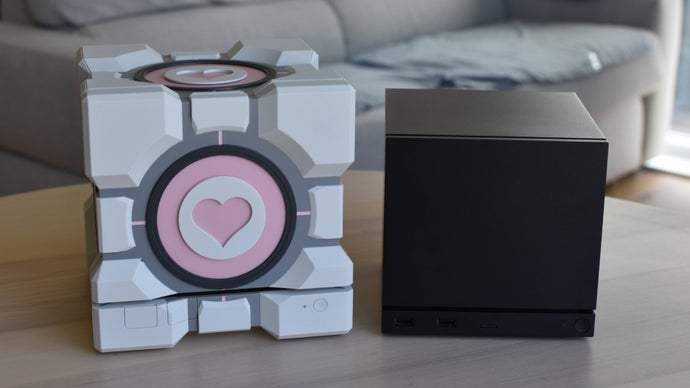
Valve's legal team moved swiftly against Dbrand's unofficial Steam Machine Companion Cube case, forcing the accessory maker to pull the product entirely. Dbrand never secured permission from Valve to use the iconic Companion Cube design, a beloved Portal reference that Valve owns outright.
The case itself represented a niche product. Dbrand crafted it as a premium enclosure for the Steam Machine, Valve's Linux-based gaming console that largely failed to gain traction in the market. The Companion Cube case stood out for its build quality, though critics questioned its practicality and pricing in equal measure. The design capitalized on nearly two decades of Portal franchise recognition, banking on nostalgia and brand affinity rather than functional innovation.
This takedown reveals how aggressively Valve defends its intellectual property. The company doesn't tolerate unlicensed merchandise using its characters or recognizable assets, even when the product quality meets professional standards. Dbrand's decision to proceed without licensing the design proved costly. The company now faces the full weight of Valve's legal apparatus, with the product scrubbed from shelves and digital storefronts.
The incident underscores a broader tension in the gaming accessory market. Third-party manufacturers frequently walk the line between homage and infringement, banking on consumer enthusiasm for beloved franchises. Some succeed through official partnerships. Others, like Dbrand in this case, miscalculate and face immediate cessation orders.
For accessory makers, the lesson registers clearly. Iconic gaming IP requires explicit permission before production begins. Valve's response serves as a cautionary tale across the industry. No matter how well-executed the product proves to be, launching unlicensed merchandise tied to established gaming properties invites legal retaliation.
Dbrand's removal from the market happens quietly compared to some takedowns