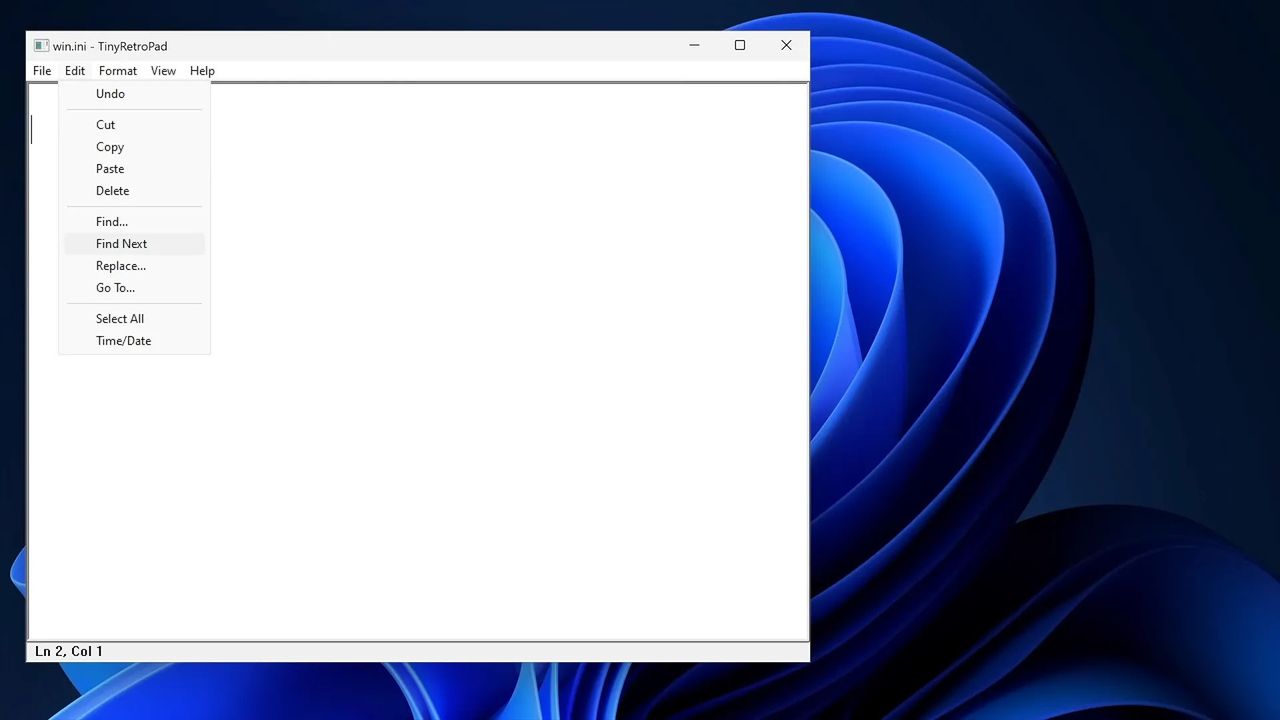
A former Microsoft developer has created a minimal Notepad alternative that strips away modern software bloat entirely. The clone weighs in at just 2,686 bytes, making it thousands of times smaller than Windows' native Notepad while delivering identical core functionality.
The developer's pitch centers on a philosophy gaining traction among users tired of telemetry, forced updates, and unnecessary features bundled into everyday tools. This stripped-down approach mirrors broader frustration with how major software companies have monetized and complicated basic utilities. The creator explicitly markets the tool with the tagline "No bloat, no telemetry, no nonsense."
For context, modern Notepad has accumulated features and backend processes that bloat its footprint considerably. This alternative proves a text editor needs nothing beyond basic file handling, editing, and saving capabilities. The 2,686-byte size allows instant loading and minimal system resource consumption, a stark contrast to feature-heavy competitors.
The project taps into a growing cottage industry of minimalist software alternatives. Users across tech communities have repeatedly expressed fatigue with surveillance-oriented design patterns and unnecessary complexity in tools that once remained simple for decades. A Notepad clone that prioritizes efficiency over profit motives resonates in this environment.
The developer suggested tackling File Explorer next, hinting at ambitions to create a full suite of bare-bones Windows alternatives. File Explorer would represent a considerably more complex undertaking than Notepad, but the principle remains identical: remove everything except essential functionality.
This reflects a shift in how some developers view software design. Rather than chasing new features and engagement metrics, minimalist approaches sell simplicity as a feature itself. The tiny file size becomes the selling point, not a limitation to overcome. Whether this niche appeal translates into mainstream adoption remains unclear, but it demonstrates persistent hunger for software that respects user privacy and system resources over corporate interests.