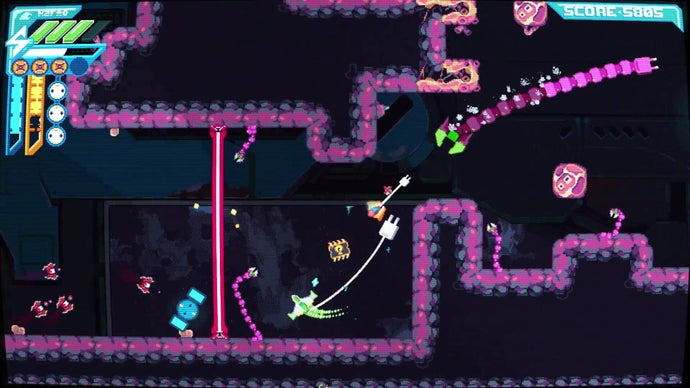
Hyperwired, a space shooter from Spanish developer Sidralgames, wraps its core mechanic around one deliberately dumb premise. Your starfighter launches into battle with its charging cable dangling from the back like a cosmic embarrassment. The cable doesn't just look ridiculous. It defines how you survive.
The gameplay loop demands constant battery management. Your ship's power depletes during combat, forcing you to dock with satellites scattered across each stage to recharge. This creates a risk-reward tension. Do you break off from attacking enemies to refuel, or push your luck and risk a complete power loss mid-fight. Enemy fire adds pressure. Dodging incoming shots becomes harder when you're calculating fuel reserves and plotting routes to the nearest charging station.
Sidralgames leans into the absurdity. The cable drags behind your vessel throughout every encounter, a physical constraint that changes how you navigate. It's not a visual gag that fades. The trailing cord becomes part of your tactical awareness. You can't simply zip around enemies with total freedom. That cable limits your turning radius and creates new vulnerability angles for opponents to exploit.
The premise works because it solves a design problem with humor. Battery management systems typically feel like resource meters on HUDs. Hyperwired makes it physical. The cable isn't a bar that depletes. It's an actual object enemies can target, a liability you drag through space, a constant reminder of your ship's desperation.
This approach separates Hyperwired from standard arcade shooters. Instead of pure reflexes, players balance offense, defense, and logistics. The doofy aesthetic hides legitimate strategic depth. You're not just fighting. You're managing a ship held together by cosmic duct tape and poor planning.
The game launches in a crowded indie shooter market, but the cable mechanic gives it immediate identity. Players recognize it