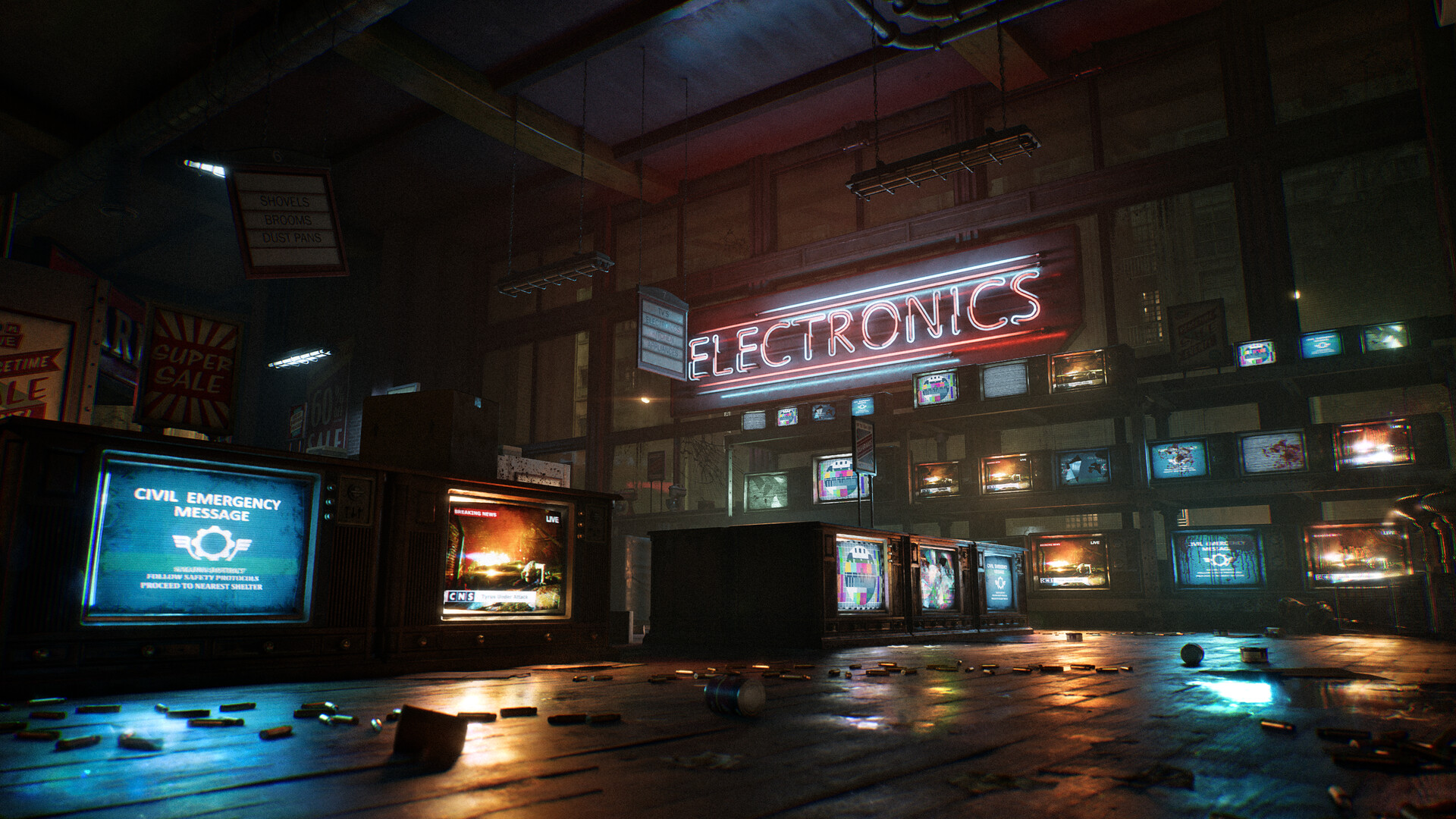
The Coalition leveraged Unreal Engine 5's advanced capabilities to push Gears of War: E-Day beyond what previous entries could accomplish technically. Kate Rayner, the game's technical director, highlighted ray-traced muzzle flashes as a concrete example of UE5's impact on development. The studio couldn't achieve this level of visual fidelity in earlier Gears titles.
UE5's real-time ray tracing technology enabled The Coalition to render dynamic lighting effects with precision previously confined to offline rendering. Muzzle flashes now cast accurate light and shadows in real time, creating more immersive combat scenarios. This technical leap extends to the broader visual language of E-Day, which serves as a prequel exploring the franchise's origins on Sera.
Ray tracing in UE5 represents a generational shift for console developers. The technology demands substantial GPU resources, but modern hardware optimization and engine-level improvements make widespread implementation feasible. For a franchise built on visceral gunplay, precise muzzle flash rendering transforms how players perceive weapon feedback and environmental reaction.
E-Day aims to recapture the series' brutal chainsaw-saw-gun combat identity while modernizing its technical presentation. The Coalition's decision to build on UE5 rather than the heavily modified version used for Gears 5 reflects industry-wide movement toward cleaner engine pipelines. This approach accelerates development cycles and reduces technical debt.
The prequel's focus on early Locust emergence and human survival creates opportunities for environmental storytelling enhanced by UE5's lighting systems. Ray-traced reflections on wet concrete, dynamic shadows cast by explosions, and realistic material interactions compound the sense of a world in crisis. These aren't mere visual flourishes. They anchor player immersion in combat encounters.
The Coalition faces pressure to deliver a commercially viable Gears experience after mixed