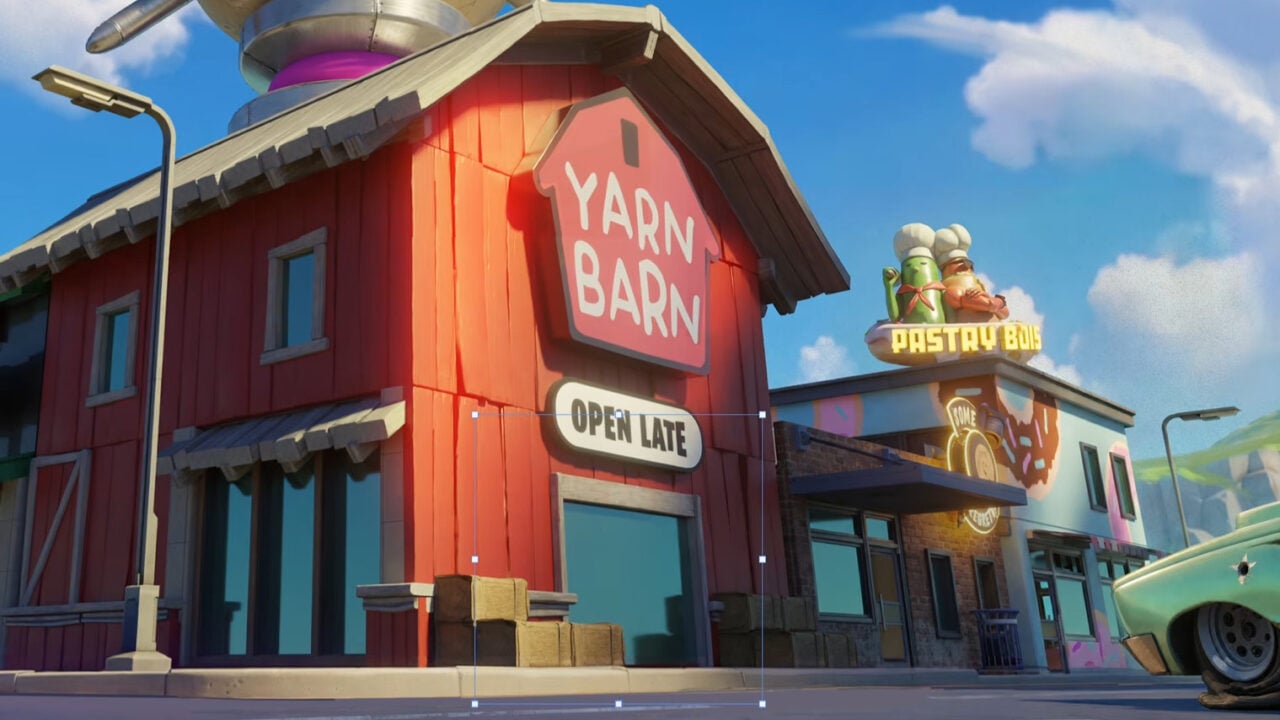
Epic Games demonstrated its generative AI art workflow at a recent developer presentation, revealing a process where AI generates initial character and building concepts that human artists must subsequently correct and refine.
The demonstration showed GenAI producing flawed outputs across Fortnite assets. Characters displayed anatomical errors, proportional mistakes, and design inconsistencies. Buildings contained structural problems and architectural nonsense that violated basic spatial logic. In each case, Epic's artists had to manually intervene to fix these defects before assets reached production quality.
Epic framed this approach as a time-saving workflow where AI handles initial ideation and rough blocking, allowing artists to focus on refinement rather than starting from blank canvases. The company argues this accelerates the concepting phase by letting human talent work faster downstream.
However, the presentation inadvertently demonstrated GenAI's current limitations in creative production. Rather than replacing human work, the technology generated additional correction tasks. The "mistakes riddling" assets suggests Epic's AI integration still creates overhead instead of eliminating it.
This workflow reflects broader industry patterns. Many studios experiment with GenAI for asset generation, but most discover the correction phase requires experienced artists anyway. The bottleneck simply shifts rather than disappearing.
Epic's transparency about these flaws stands out. Many developers oversell AI capabilities without showing the messy reality of implementation. Showing broken character rigging and impossible building geometry provides honest context about where the technology actually performs.
The demonstration raises questions about efficiency claims. If artists must comprehensively fix GenAI output, the time savings remain unclear. Epic hasn't released production metrics comparing this workflow against traditional concepting. Without concrete data on whether this actually accelerates development, the approach remains an experiment.
For Fortnite specifically, this impacts how quickly Epic can generate seasonal content and cosmetics. If the process proves genuinely faster, it could accelerate the battle pass cycle and cosm