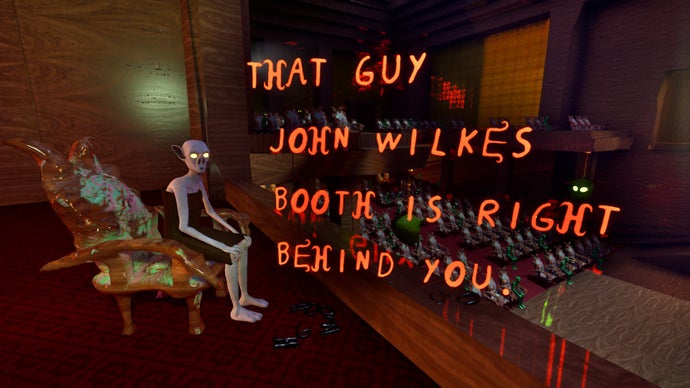
goblinAmerica drops players into a grotesquely distorted alternative America where nothing behaves like it should. This first-person shooter warps familiar landmarks and figures—including a version of Abraham Lincoln who narrowly avoids assassination—into body-horror nightmares that defy biological logic.
The game's aesthetic bleeds disturbing surrealism throughout. A tutorial encounter has you obliterating a cherry tree that exists as some kind of fleshy, rubbery monstrosity. The fruit hangs like implanted weights. Its death animation contorts the landscape in ways both disturbing and oddly compelling. These aren't just enemies. They're abominations shaped by whatever has infected this version of America.
goblinAmerica embraces grotesque design as its core identity. Rather than traditional shooting mechanics against humanoid foes, players confront twisted versions of everyday objects and historical figures corrupted into unrecognizable forms. The game seems intentionally designed to provoke discomfort while maintaining dark comedic undertones.
The alternative history framing gives the surrealism purpose. By placing familiar American symbols and figures into this putrefying world, goblinAmerica creates cognitive dissonance that amplifies the horror. Lincoln's narrow escape from his historical assassination adds another layer. The game's title suggests goblins have fundamentally altered American reality itself.
This approach separates goblinAmerica from standard shooter fare. Rather than fighting conventional enemies, players navigate a reality so fundamentally broken that cherry trees become boss encounters. The game trusts players to find the dark humor in grotesque encounters rather than explaining its logic.
Rock Paper Shotgun's coverage indicates goblinAmerica targets PC players willing to embrace experimental design. The game doesn't chase mainstream shooter audiences. Instead, it appeals to players seeking something disturbing and unforgettable. Whether it succeeds depends on