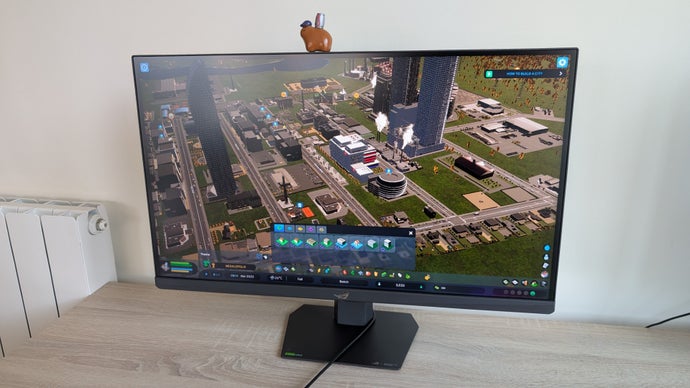
Nvidia's G-Sync Pulsar monitors deliver genuine motion clarity improvements that outperform standard gaming displays, but pricing remains prohibitively high for mainstream adoption.
G-Sync Pulsar uses rapid backlight strobing synchronized with frame delivery to reduce motion blur without sacrificing brightness or color accuracy. Unlike previous strobing tech, Pulsar's implementation actually works. The backlight pulses multiple times per frame at ultrafast intervals, creating the perception of sharper motion even at lower refresh rates. Nvidia demonstrated the tech alongside frame generation systems at a February event, and early testing confirms the breakthrough delivers tangible benefits for fast-paced titles.
The core innovation addresses a real problem. Standard gaming monitors struggle to render smooth motion clarity because ghosting occurs when pixels transition between frames. Pulsar's approach essentially mimics how human eyes perceive motion, compressing the blur window to improve what players actually see during gameplay. Performance gains appear most dramatic in competitive shooters and action games where motion perception directly impacts reaction times.
However, Nvidia's current Pulsar lineup carries premium pricing that makes adoption difficult outside enthusiast circles. The technology requires custom hardware and tight synchronization between the monitor's backlight and GPU, limiting manufacturing partners and driving costs up. Asus and other manufacturers have begun producing Pulsar-compatible panels, but early units demand steep premiums over conventional high-refresh alternatives.
The display market has stagnated around 144Hz, 240Hz, and 360Hz refresh rates with minimal innovation beyond raw speed. Pulsar represents a legitimate advancement in how motion translates to player perception, offering real value that bypasses typical marketing fluff. Yet the pricing gap between entry-level and Pulsar monitors remains substantial enough to keep the tech confined to high-end builds.
Pulsar succeeds where previous motion clarity tech failed by maintaining image quality while reducing blur. If manufacturers can