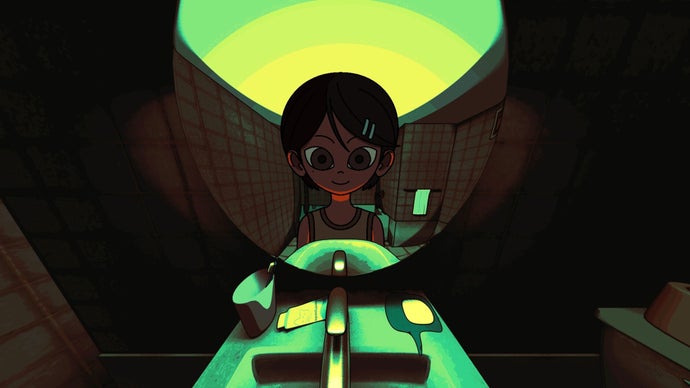
Am I Nima debuted this weekend during the Story Rich Showcase as a visual novel that blends narrative with a unique word-fusion mechanic. Players control Nima, who must combine words in her mind to persuade her mother that she is genuinely her daughter. The game explores deeply uncomfortable themes, including potential abuse triggers, centering on family trauma and identity validation.
The word-fusion system forms the game's core interaction. Rather than traditional dialogue trees, players gather vocabulary and fuse words together to construct arguments and emotional appeals. This mechanical approach transforms the mother-daughter conflict into a puzzle that demands both linguistic creativity and psychological insight. Success means assembling the right emotional language to break through her mother's denial or resistance.
Story Rich Showcase provided the platform for this indie title, signaling growing appetite for narrative-driven games that tackle darker family dynamics. Visual novels continue evolving beyond romance-focused narratives toward experimental storytelling that challenges players emotionally. Am I Nima positions itself in that space, where mechanical design directly supports thematic content rather than simply decorating a linear story.
The game's premise strikes at something raw. Maternal recognition and validation form the foundation of human development, and Am I Nima weaponizes that vulnerability into gameplay. The word-fusion mechanic forces players to articulate why they matter, why their existence should be acknowledged, why their bond exists. It is uncomfortable by design. That discomfort becomes the point.
Thematic weight alone won't guarantee success. Execution matters. If word combinations feel arbitrary or if the game fails to deliver emotional payoff for player effort, the concept collapses. If the writing captures the specific pain of being unmothered, of needing to argue for your own reality, then Am I Nima could resonate deeply. The game walks a knife's edge between artistic expression and potential exploitation of trauma.
Release details remain