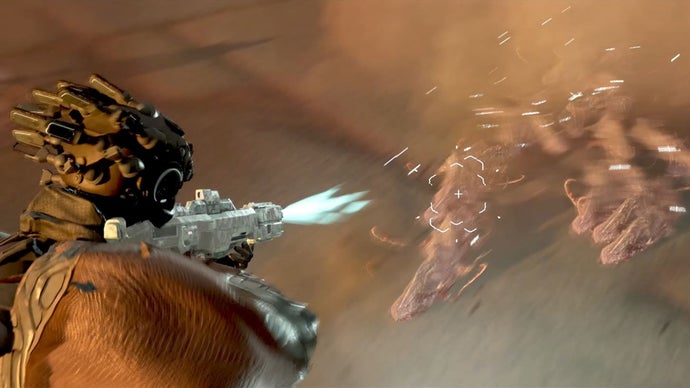
Fumito Ueda revealed Gen Atlas at Summer Game Fest, his next project after The Last Guardian. The game casts players as a scavenger navigating a desert world filled with the corpses of colossal robots. Your goal involves reassembling one of these massive machines, though Ueda keeps the exact objective deliberately vague.
The twist. Yes, your character carries a gun. Ueda emphasizes this is not a shooter. The weapon exists in the world, but it does not define the experience. This distinction matters given Ueda's design philosophy across Ico, Shadow of the Colossus, and The Last Guardian. Those games prioritized exploration, environmental storytelling, and unconventional gameplay over traditional action mechanics. Gen Atlas follows that blueprint.
The desert setting and dead robot landscape signal another shift for Ueda. His previous work favored contained, almost claustrophobic environments. Here, vast emptiness surrounds you. The carcasses of these machines become landmarks, puzzle elements, and perhaps narrative anchors. Scavenging suggests resource gathering and discovery rather than combat progression.
Ueda's insistence that Gen Atlas is not a shooter reveals something about modern game marketing. Publishers and players increasingly default to labeling anything with a firearm as an action or shooter title. Ueda rejects that framing. He's protecting the game's identity before release, signaling to his existing audience that this follows his established design language. The gun serves a purpose within a larger vision.
This approach resonates with players fatigued by combat-focused AAA experiences. Ueda has built a career on that fatigue, creating games that ask different questions. Gen Atlas continues that tradition. Whether the gun plays a mechanical role, a narrative one, or purely aesthetic remains unknown. That ambiguity is intentional. Ueda trusts players to explore and discover