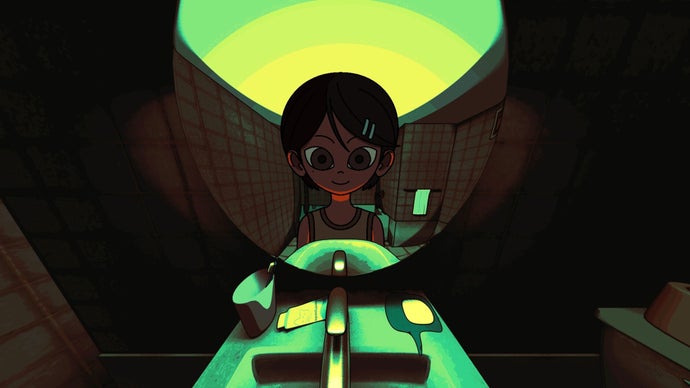
Am I Nima is a narrative-driven visual novel debuting at the Story Rich Showcase where players assume the role of Nima, a character attempting to prove her identity to her mother through an unconventional mechanic. The core gameplay involves finding and fusing words together to construct persuasive dialogue and memories that convince her mother of her true identity.
The game tackles heavy thematic material centered on maternal relationships and identity verification, with developer warnings noting potential triggers around abuse. This positions Am I Nima as a story-first experience rather than traditional gameplay-focused title, leaning into the visual novel format's strength in character-driven narratives.
The word-fusion mechanic serves as the primary interaction method, blending linguistic puzzle elements with dialogue choices. Players must strategically combine words to unlock authentic responses that resonate with Nima's mother, creating tension between what the player knows to be true and what they can articulate through the game's vocabulary system. This design choice directly ties mechanics to narrative, making the gameplay itself part of the emotional experience rather than a separate system.
The Story Rich Showcase platform positions Am I Nima alongside other narrative-focused indie games, suggesting developer focus on literary and thematic depth over broad commercial appeal. Visual novels remain a niche genre on PC, though titles with strong character work and unconventional storytelling continue finding engaged audiences.
The game's exploration of identity and maternal doubt taps into psychological horror territory without relying on jump scares or traditional genre trappings. By making proof of identity the central conflict, Am I Nima creates discomfort through emotional stakes rather than supernatural elements, a design philosophy gaining traction in indie narrative games.
Release details remain sparse following the showcase presentation, but the title's conceptual boldness and willingness to tackle uncomfortable family dynamics suggest developer commitment to story over marketability, a risky but increasingly appreciated approach in visual